What Peptides Actually Do to Your Skin (And Which Ones Are Worth Buying)
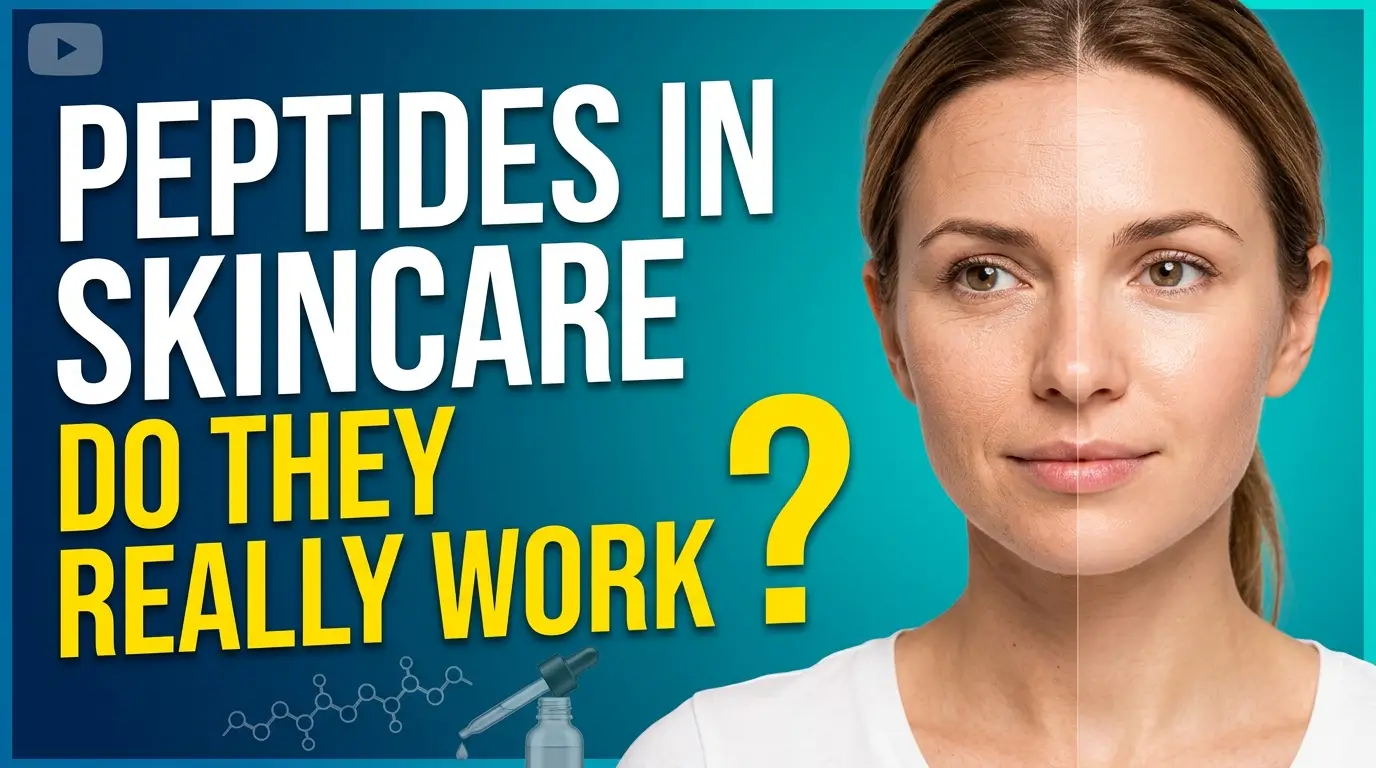
Last month I bought a small bottle of serum for sixty dollars, which carried the term “biomimetic.” There are hundreds of glass droppers all around with bright lights everywhere and you feel like you need a chemistry degree to wash your face in a pharmacy. We see words such as Palmitoyl Pentapeptide-4 or Acetyl Hexapeptide-8, and we think the more complicated the more effective. It’s no surprise that many people ask, peptides in skincare do they really work.
Peptides aren’t magic, as the marketers portray them, nor are they purely scientific, but they are a reality. These ingredients are not only costly moisturizers! They are specific tools for specific jobs. But if you use them incorrectly, or if they are made poorly, you’re simply wasting costly water on your skin. This is why understanding peptides in skincare do they really work is so important before buying expensive products.
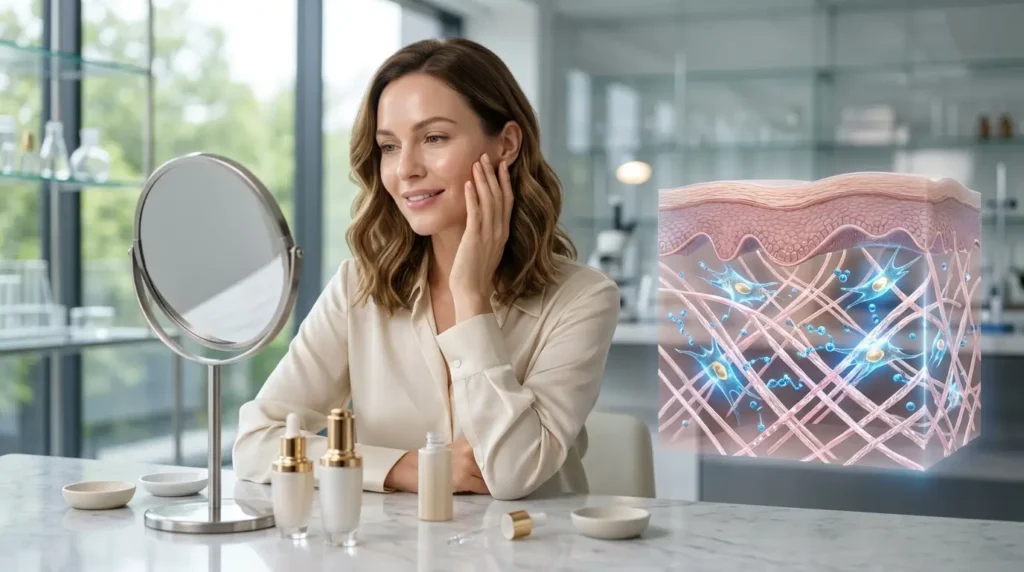
Why Peptides Feel Like A Scam But Are Not
The majority of people purchase a peptide cream and after using it for 3 days, they do not notice any difference in their wrinkles and conclude that it is a scam. I get it. I get frustrated. We want all that instant shine that we receive from an acid peel or that overnight plumpness of using hyaluronic acid. Peptides don’t function like this.
Also Read: How To Use Vitamin C Serum For Anti Aging Correctly 2026
Peptides are short chains of amino acids. Consider them to be the alphabet. They are arranged in a ‘word’ or a protein, such as collagen or elastin. These proteins are the “scaffolding” in your skin. They make things solid. That scaffolding starts to fall apart as we age.
A peptide serum sends a message to your cells. You are fooling the skin into believing it has a wound that it’s trying to heal. This signals the fibroblasts to start making more collagen. It’s a gradual process. It takes time for your body to build new structural tissue.
The 500 Dalton Rule And Why Size Matters
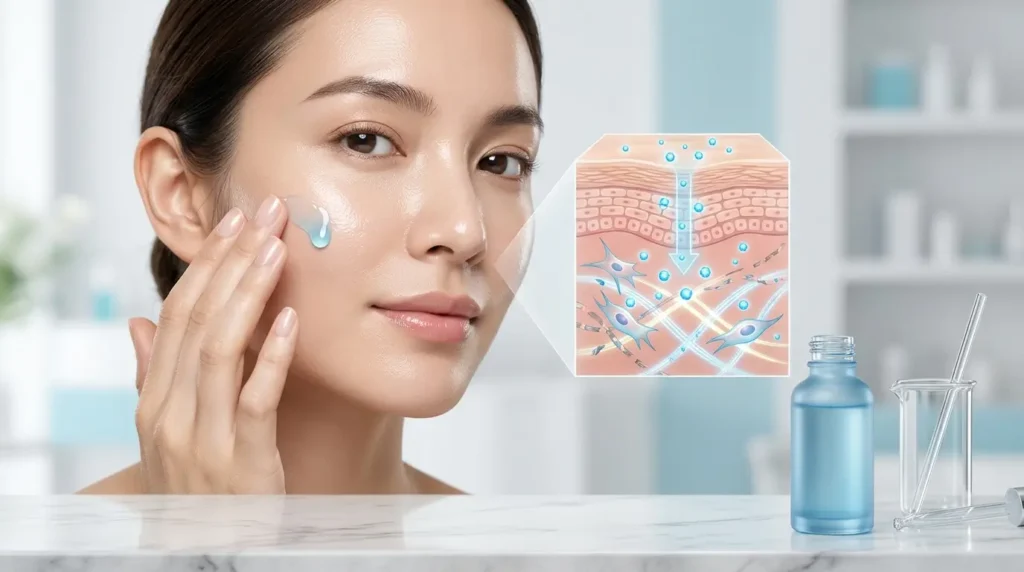
The most common reason for failure of peptide products is that they do not penetrate into the skin. Your skin is a gatekeeper. Its job is to keep things out. A unit of measure known as the Dalton is used by scientists to measure the weight of molecules.
In dermatology there’s a rule that’s known as the 500 Dalton Rule. It is written that molecules more than 500 Daltons are not effective enough to permeate the skin barrier. Numerous low-priced peptides are too heavy. They sit on the surface, look shiny for an hour, and then get washed away down the drain.
High-quality brands address this by adding a fatty acid “tail” to the peptide. This will be listed on the label as “Palmitoyl.” This tail makes the peptide penetrate the oily layers in your skin. For deep wrinkles, if your serum lacks the delivery aids, it’s unlikely to do much good.
Signal Peptides And The Matrixyl Effect
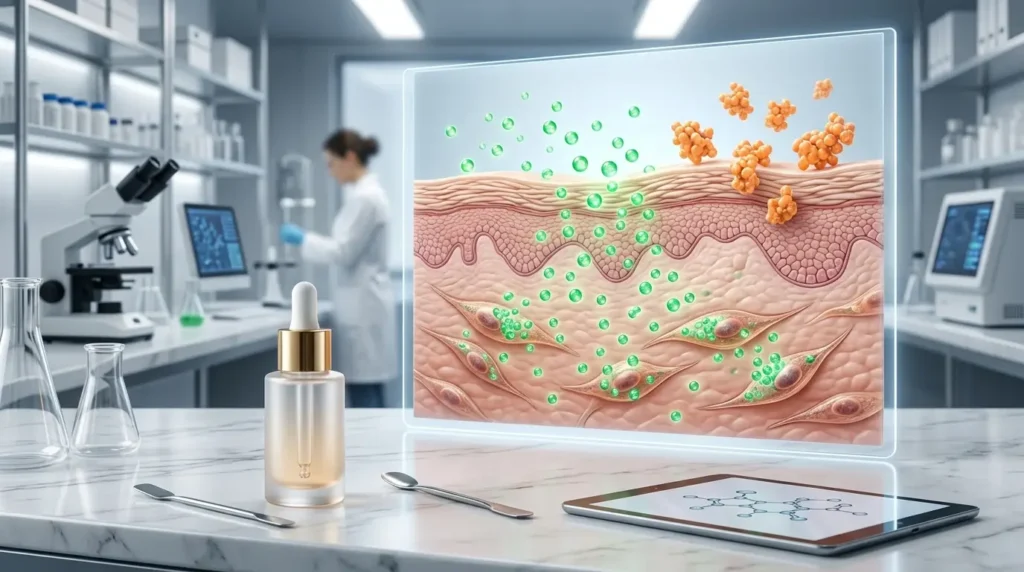
If you’re seeking to fix saggy or lean skin, you are searching for signal peptides. The most popular one is known as Matrixyl 3000. Scientists at the University of Reading discovered this particular peptide increases the skin’s production of collagen by 100% in a 2013 study.
Also Read: How To Use Retinol For The First Time Without Irritation 2026
They operate similar to a foreman on a building site. They instruct the workers to get to the job. Simply using a signal peptide continuously for 8–12 weeks can often make the skin feel thicker. It has a higher “bounce.” This isn’t a miracle — it’s basic biology. You are giving directions in the way you would have given them when they were young.
Copper Peptides For Skin Repair
Copper peptides are unique. These are carrier peptides. Their role is to transport a trace mineral, copper, and bring it deep into the cells. Copper is a strong healing element.
Copper peptides are best used by those with tired or damaged skin due to overexposure to the sun. They function as antioxidants, and remove old, damaged collagen to let new collagen in.
Caution: Copper peptides are picky. They prefer not to be in high acidity. A strong Vitamin C serum or glycolic acid wash could break the bond if you use these products immediately before the copper peptides. Then the copper will come off, the peptide will become ineffective, and you may even irritate the skin. Continue their separate routines. Apply acids in the morning and copper at night.
Botox In A Bottle And The Argireline Myth
Maybe you have heard of videos that say that Acetyl Hexapeptide-8 — otherwise known as Argireline — can be substituted for Botox. This is a stretch. Botox is an injection that is injected into the muscle tissue. A serum remains in the skin.
Argireline is a neurotransmitter-inhibiting peptide. It works in theory by blocking the signals that tell the muscles in your face to contract. The less the muscle contracts, the less the wrinkle will form.
In my experience, Argireline is most effective on the “expression lines” around the eyes or forehead, which are the finer lines. It won’t freeze your face. It will not provide the same dramatic effect as a needle. It’s a gradual improvement that takes place over a period of months. It’s good for those who want to put off their initial series of shots or want to prolong the time between them.
Peptides Versus Retinol
The most frequently asked question is which one should be used, peptides or Retinol? These two aren’t enemies. They are partners.
| Feature | Peptides | Retinol |
|---|---|---|
| Goal | Developing and repairing cells | Turnover |
| Irritation | Almost zero | Can be high |
| Results | 8–12 weeks | 4–8 weeks |
| Skin Type | All, even sensitive | Resilient skins |
Retinol is the golden standard in anti-aging products as it increases the rate at which new cells are produced in the skin. However, Retinol is a tough chemical. It makes the skin peel, go red, and dry.
Peptides are the gentle alternative. They don’t peel. They don’t really thin out the skin barrier — they actually strengthen it. If you have sensitive skin and cannot use Retinol, peptides will be your best option. If you can tolerate Retinol in your skin, then the best tactic is to use them both! The Retinol exfoliates dead skin cells, while the peptides are the ingredients that will build healthy skin.
The Biggest Mistakes People Make With Peptides
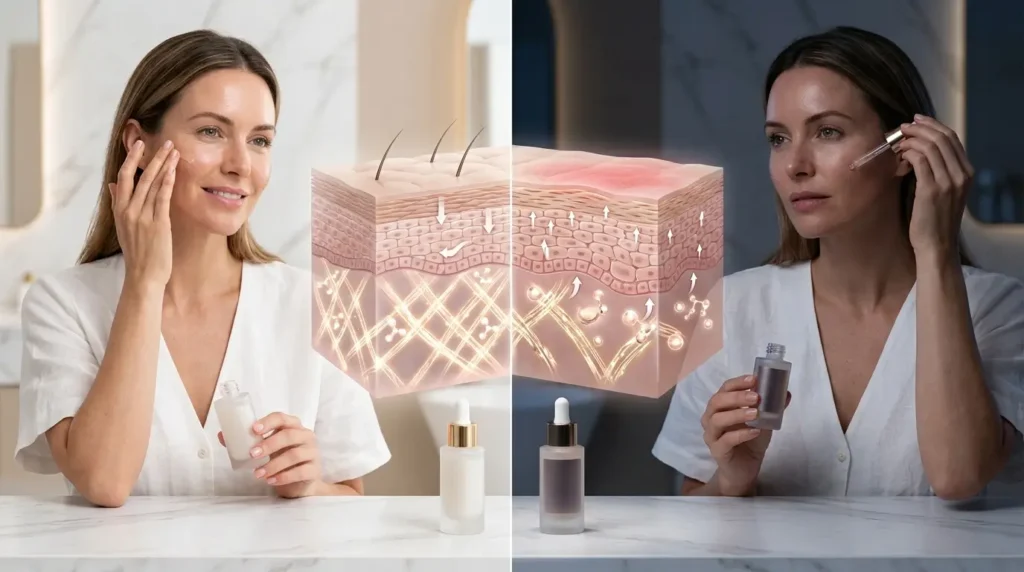
It seems as though there are three common errors people make with these products.
First, they purchase peptide cleansers. This is a very costly exercise. Peptides must wait a while to begin the signaling process. If you apply a peptide on your face and wash it off after 30 seconds, you are literally washing down your money. Use the reserved funds for “leave-on” items such as serums or moisturizers.
Second, they keep them in the sunlight. Peptides are fragile. The chemical bonds are broken by heat and UV light. Store in a dark drawer if your serum comes in a clear glass bottle. It will become inactive after a month if it is placed on a sunny windowsill.
Third, they demand speed. There’s no surgery involved with skin care. If a brand says it will give you “wrinkle-free skin in seven days,” it is lying. It takes approximately 30 days to complete the renewal of your skin. This will not impact the deep structure of your skin until after 2–3 of those cycles.
Professional Treatments And Local Options
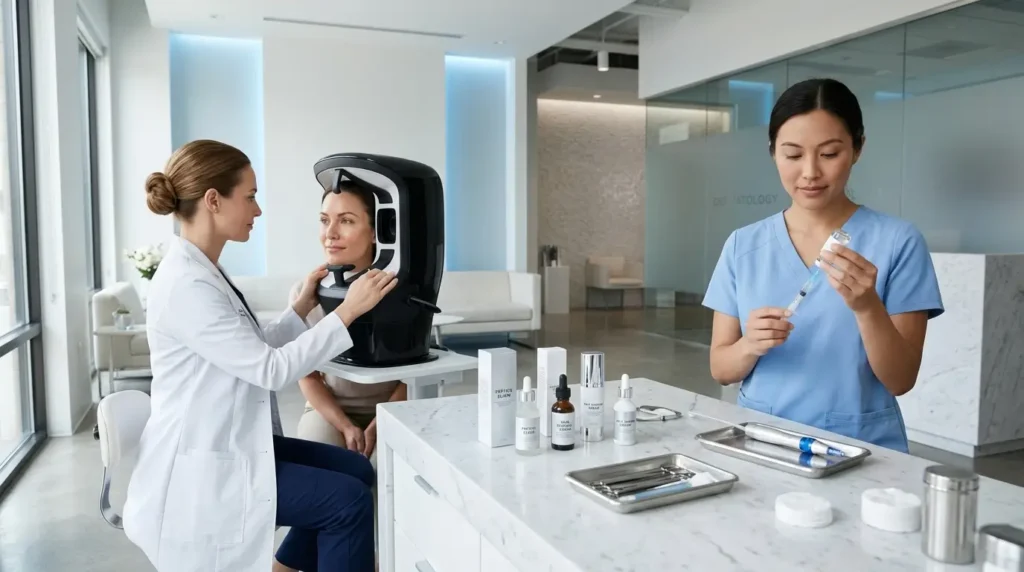
For more immediate results you may consider professional treatment. Peptide infusions are becoming a common practice at many medical spas.
The cost of a “Peptide Microneedling” session in New York or London can range from $300 to $600. In this treatment, the professional creates very small channels in the skin with the help of very fine needles. Then, they flood these channels with high-concentration peptides.
This completely avoids the 500 Dalton rule. The peptides find the exact location they need to be at. That’s why a “medical grade” serum from a doctor’s office is more effective than a ten-dollar serum from the grocery store. Its concentration and delivery are just outstanding.
Also Read: Is Ceramide Good For Dry And Sensitive Skin 2026
How To Build Your Routine
When you’re all set to give them a shot, here’s the best way for them to become a part of your day.
- Wash skin with a mild, non-acidic skin wash.
- Keep skin just moist. Some molecules are transported with the help of water.
- Apply the peptide serum. Focus on areas with fine lines.
- Allow 2 minutes to dry.
- Seal it in with a moisturizer.
When using other actives, remember “thin to thick.” Serums before creams. If you’re using copper peptides, store your AHAs and BHAs separately.
Are They Worth The Money?
If you have realistic expectations, I think peptides are worth the investment. They’re great for individuals who are seeking to enhance the “integrity” of their skin. A quality signal peptide serum will be a lifesaver if you notice that your skin is thin, papery, and easily irritated.
Don’t purchase them just to clear up acne. Don’t purchase them to get rid of dark spots. Use them for texture, firmness, and strength. Check the brands for their transparency with percentages. Typically, the concentration range of 3–10% of a peptide complex is ideal for observing actual changes.

FAQs
Is It Safe To Use Peptides With Vitamin C?
You can. The stability of most signal peptides allows the use of Vitamin C. But these exceptions do not apply to copper peptides. Just to be cautious, I take my Vitamin C in the morning and my peptides in the evening.
Is Matrixyl Better Than Copper Peptides?
Neither is better. They do different things, that’s all. Matrixyl is better for firming and wrinkles. Copper is better for healing, redness, and overall skin health.
Is It Safe To Use Peptides Daily?
Yes. Peptides require no “buffering” as acids or retinol do. They are not abrasive to the skin. They can be used twice daily, every day!
Do Peptides Help With Under-Eye Bags?
They can help with the fine lines under the eyes, but will not typically correct the “bags” or puffiness from allergies. If puffiness is a primary concern, then look for peptides such as Eyeliss.
At What Age Should I Start Using Them?
Collagen begins to decline around the age of 25. It’s good to begin then for prevention. But the “before and after” results are often most noticeable in people around the age of 40–50.
Are There Vegan Peptides?
Yes. Amino acids can be derived from animal sources, but many modern peptides for the skin are “biomimetic.” This indicates that they are made in a lab to produce proteins that are similar to human proteins, but not from an animal source.
Will Peptides Make Me Break Out?
Peptides, in themselves, do not typically lead to acne. When you are experiencing breakouts, it is typically the “base” of the product, such as a heavy oil or some type of wax in a cream. Use a water-based serum in case of oily skin.
Peptides aren’t a magic bullet for anti-aging. Nothing is. They do not, however, produce any negative side effects and are a scientifically researched method to help your skin look younger for longer. They are the “long game” of skin care. Purchase a bottle fitted with the correct delivery tail, and set it in a dark place for 3 months. You may get a shock if you check your face in the mirror and notice that your face is a bit sturdier now.