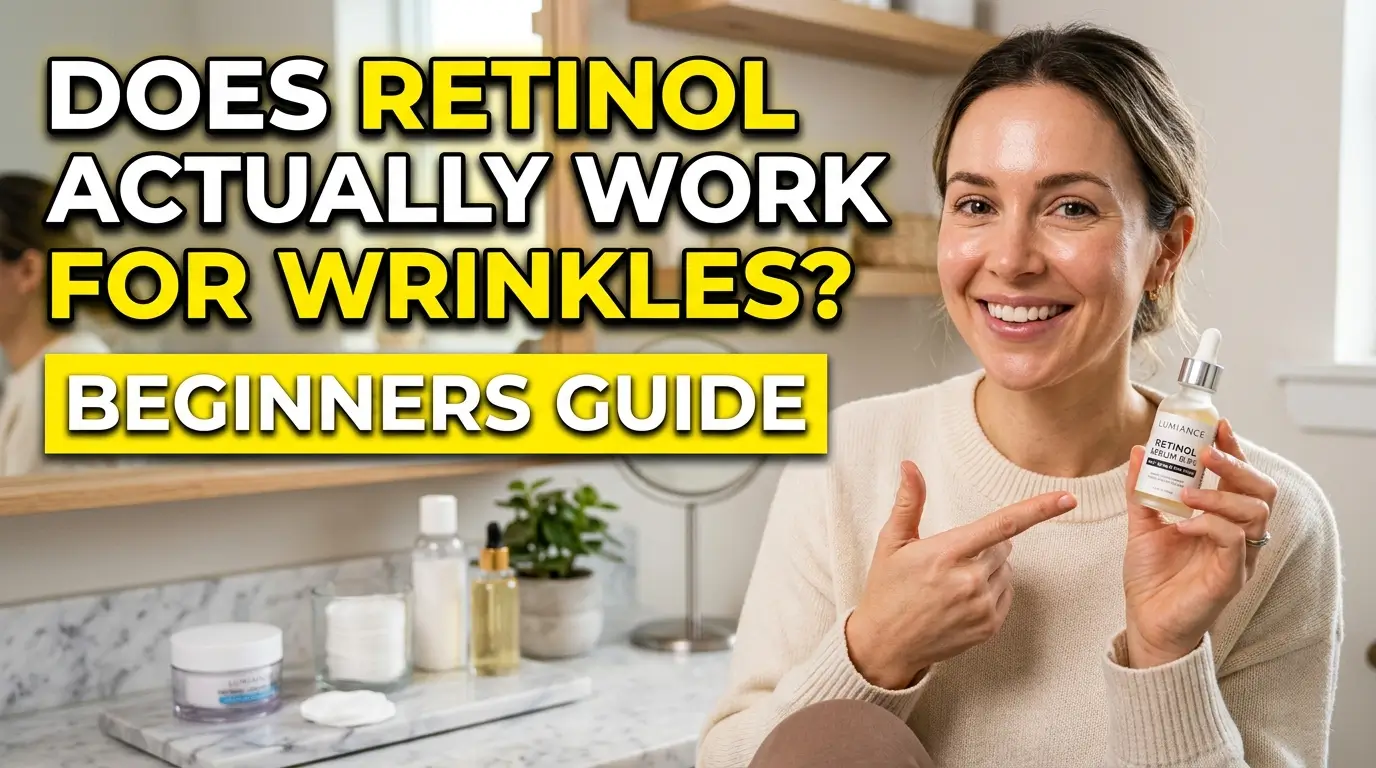
I looked at the small $45 tube at my bathroom counter. The fine lines were guaranteed to be removed, according to the label. In the past I disregarded the marketing jargon, ended up with red, flaky skin and a wallet that was empty. You may have the same hesitation. Is retinol the solution to wrinkles, or another fancy pricey solution? This does retinol actually work for wrinkles beginners guide will help answer that question.
Yes, retinol does help with wrinkles by boosting cell turnover and stimulating your dermis’ fibroblasts to produce more collagen. This puffs up the skin and helps to eliminate wrinkles over time, which is why does retinol actually work for wrinkles beginners guide is such a common question among skincare beginners.

The Skeptic’s Guide to Vitamin A
Vitamin A derivative is retinol. It is a topical retinoid that is part of a group of drugs that contain a type of vitamin A. Enzymes are converted into retinoic acid when applied to the skin. This acid interacts with cells and changes the way they behave by binding to retinoic acid receptors.
Also Read: How To Shrink A Pimple Overnight Without Popping It 2026
Marketing promises are huge. They demonstrate perfect examples and say that one drop can reverse the aging process. The actual clinical reality is otherwise. Retinol is effective in reducing fine lines. It improves texture. It fades hyperpigmentation. It is not enough to remove wrinkles that are deeply embedded. There are clinical interventions that can be used for rhytides. To not get disappointed, you must have realistic expectations.
The Science of Photoaging
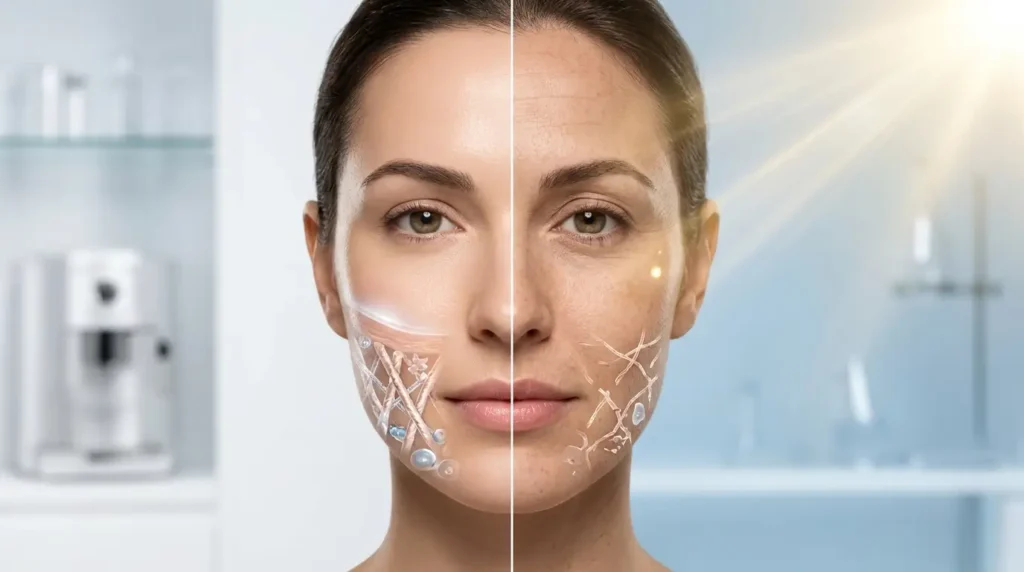
The process of photoaging is due to sun damage. Collagen and elastin fibres in your dermis become destroyed by UV rays. Your skin becomes disorganized. Begins to sag and wrinkle.
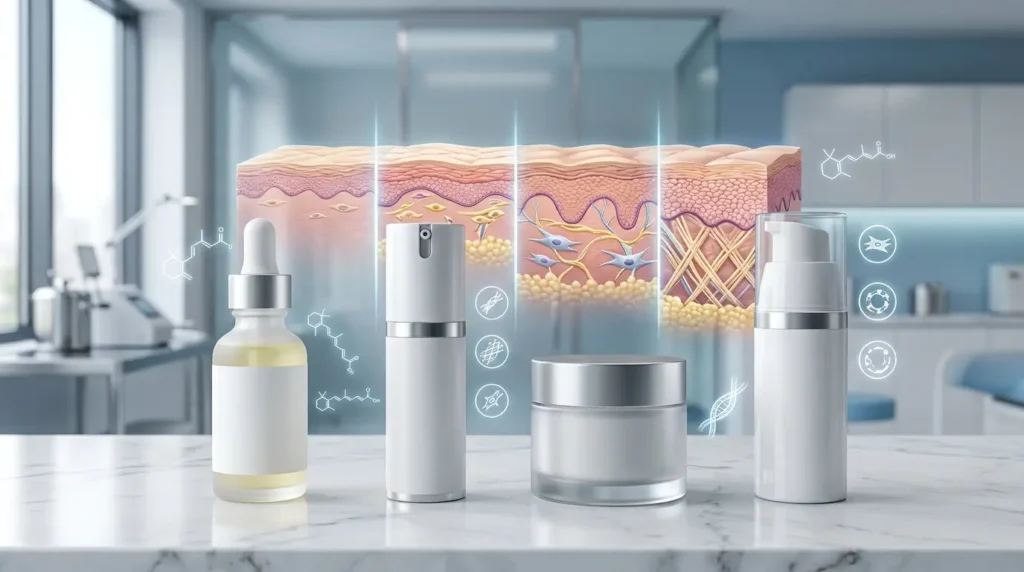
Retinol treats the damage at a cellular level. It interacts with your genes. This communication makes old cells act like young cells. It is an inhibitor of enzymes which are involved in the degradation of collagen. It stimulates fibroblasts to manufacture new collagen type I and III. This double-action helps to create a stronger base within the skin.
How Retinol Changes Your Skin
Cell Turnover and Collagen Production
As you get older, the process of cell turnover slows. The dead skin cells accumulate on the epidermis. Your skin is sallow. Below, your collagen production decreases.
Retinol is a solution to both issues. It clears dead cells that are stuck together. This unveils the new skin under. It stimulates your fibroblasts to make collagen and elastin. This makes the dermis thicker.
How Long Does It Take for Retinol to Work?
People want same-day results. They remain absent. According to data published in the Journal of Cosmetic Dermatology, one should wait for 12 to 24 weeks to see real benefits on fine lines. The amount of time varies based on your cell turnover rate and the concentration of the product.
This is a timeline of what to expect.
| Timeframe | Expected Result |
|---|---|
| Weeks 1 to 2 | Dryness, slight flaking |
| Weeks 4 to 8 | Smoother texture, smaller pores |
| Weeks 12 to 24 | Fine lines become apparent |
Successful users from quitters are separated by patience. By week three, many people give up due to dryness. They fail to see the long-term advantages.
Retinoid Strength Comparison
There are several types of retinoids. All of them are metabolized to retinoic acid. The difference is in the steps that are used to convert. The more steps the more subtle the effect.
| Type | Strength | Access |
|---|---|---|
| Retinyl Palmitate | Ultra Mild | Over the counter |
| Retinol | Moderate | Over the counter |
| Retinaldehyde | Strong | Over the counter |
| Retin-A | Maximum Strength | Prescription |
Retinaldehyde is one step easier to convert than retinol. It is a faster pace but will cost more. Tretinoin is a gold standard. It skips conversion. You need a board-certified dermatologist to get it.
Understanding the Retinization Phase
The phase of retinization is a fearsome one for the beginner. This is known as the purge, according to dermatologists. The skin gets used to the active ingredient. It exfoliates very fast. This results in flaking, redness and light peeling.
Also Read: Salicylic Acid Or Benzoyl Peroxide: Better For Acne 2026
Some people get acne. The underlying sebum and bacteria is brought to the surface through the purge. The feeling is like going back in time. It’s a step in the right direction. Once this stage is over, your skin barrier is enhanced.
How to Start Using Retinol
- At night, wash your face with a mild facial cleanser.
- Wait 20 minutes for your skin to dry.
- Put a dollop on your face.
- Apply a moisturizer.
- Apply twice weekly for 2 weeks, then up to three times if necessary.
- Record your apps with a habit tracking app. This will help stop any accidental double-dosing.
The Retinol Sandwich Method
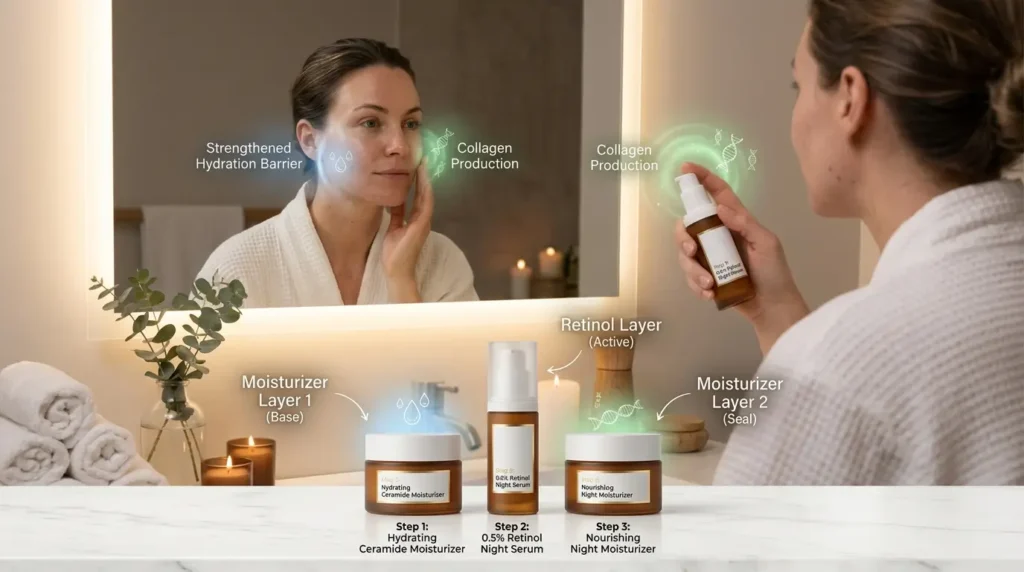
If you have sensitive skin, try the sandwich method. Apply moisturizer. Apply the retinol. Apply second layer of moisturizer. This protects the active ingredient and avoids burn to the retina. With sensitive skin, this technique helps to allow for the tolerance of the ingredient.
Why Damp Skin Causes Burns
Retinol is readily absorbed by the skin when applied to wet skin. This stresses your skin with the active ingredient and ruins your skin barrier. Wait for dry skin — no exceptions. The wait is long (20 minutes). It helps to avoid harsh irritations.
Buying Guide for Beginners
Encapsulation Technology
Check for retinol that is enclosed within a capsule. Liposomal encapsulation is a technique adopted by brands to enclose the molecule in a lipid bubble. This protects it from light and oxygen. Delivers a gradual absorption to the skin. This reduces irritation. Retinol is degraded in the bottle if not encapsulated. It strikes your skin in one big wave.
Anhydrous Serums Versus Emulsion Creams
Anhydrous formulas are made of 100% dry ingredients. The advantages are the lightness and powerful performance. The con is the risk of irritation is high. Emulsion creams are a blend of oil and water. The advantages are that it has barrier support and is gentle to apply. The con is a thicker texture. For first timers, select an emulsion cream. The extra emollients calm the skin during the retinization stage.
Packaging Rules
Avoid using clear glass containers for products. Light and air destroy retinol. Purchase products in pump bottles that are opaque and airless. This packaging ensures stability of the ingredient from the first pump to the last.
Mixing Retinol With Other Actives
Do not try to change anything. Niacinamide can be used along with retinol. Niacinamide calms the skin and helps to diminish inflammation.
Do not combine retinol with alpha hydroxy acids or beta hydroxy acids. These acids decrease your skin’s pH. Retinol must have a neutral pH to be converted into retinoic acid. This is a no-no for skin barrier health.
Apply vitamin C during the day and retinol at night. During the day, vitamin C helps to defend the skin from free radicals. During night-time, retinol is going to repair your skin. Applying them both will give you a total anti-aging protection. Do not mix to avoid pH conflicts

Pricing and Cost Expectations
Over the counter retinol costs between $15 and $80. Quality is not equal to the price. The airless pump holding $20 worth of drugstore retinol is more effective than the $80 container of degraded retinol. The cost of prescription topical retinoids, such as tretinoin, is $20 to $200, depending on insurance coverage and location. Clinical treatments such as lasers and chemical peels can be done in office for $150 to $500 per treatment.
When to Seek Professional Help
You can only use over the counter drugs to a certain degree. When you have deep rhytides, sagging skin or severe photoaging, a tube of cream is not enough to solve the problem. You may look for a dermatologist who will prescribe you retinol near me. Consider anti-aging retinol treatments near me in the field of medical spas.
Retinoids and intense chemical peels are offered by local medi-spas and include microneedling. Clinical strength retinol is available at special pharmacies near me, but it should be prescribed by a physician. Look for wrinkles skin care clinics in your city or region to get a customized treatment. Qualifications of local providers are important. Look for an orthopedic surgeon or a licensed medical esthetician. General spa workers are not trained to work with strong retinoids.
Who Should Avoid Retinol
The FDA places retinoids in pregnancy Category X drugs; do not use during pregnancy or lactation. They cause birth defects. Try to steer clear of them in the event you have active eczema or rosacea flare-ups. Wait until your skin barrier has healed. Add retinol when it is not a stressful time.
Also Read: How To Reduce Fine Lines Without Botox Naturally 2026

Common Mistakes to Avoid
- Using excessive amounts. A pea-sized amount is sufficient to cover all areas of your face. More will be the same, as it will irritate without providing any additional benefit.
- Applying it during the day. Retinol is photosensitive. Sunlight degrades it.
- Skipping sunscreen. Retinol is a compound that unveils new cells in the skin. Rapid damage is caused by UV rays. Apply wide-spectrum sun protection daily.
- Halting when peeling occurs. It takes persistence to get to the retinization phase. Do light flaking to get long term flakes.
Frequently Asked Questions
Is Retinol Effective in Treating Deep Wrinkles?
No. Retinol does not improve fine lines and skin texture. Prescription tretinoin or in-office treatments such as lasers are required to treat deep wrinkles.
What Happens When You Stop Using Retinol?
Your skin goes back to its normal ageing process. Stable compared to pre-retinol, with loss of the collagen gains.
Is It Safe to Use Retinol Around the Eyes?
Yes. The thinness of the skin is the characteristic feature of this area. Apply a low concentration or a particular eye cream. Do not go on your lash line.
Why Does Retinol Cause Wrinkles?
Overuse may have damaged your skin barrier. Fine lines further accentuated by the dryness. Discontinue retinol for one week and replace with a ceramide moisturizer or one containing hyaluronic acid.
At What Age Should You Start Retinol?
They begin in the mid-20s or late 20s. This is the time when collagen production begins to decline.
Is Retinol or Retinaldehyde Better?
Retinaldehyde is more potent and effective. Retinol is gentler. Retinol is the first one to try and will improve to other products later on.
Should I Use Retinol Every Night as a Beginner?
No. Begin with 2 times per week. After two weeks, change to every other night. Going every night leads to extensive peeling.
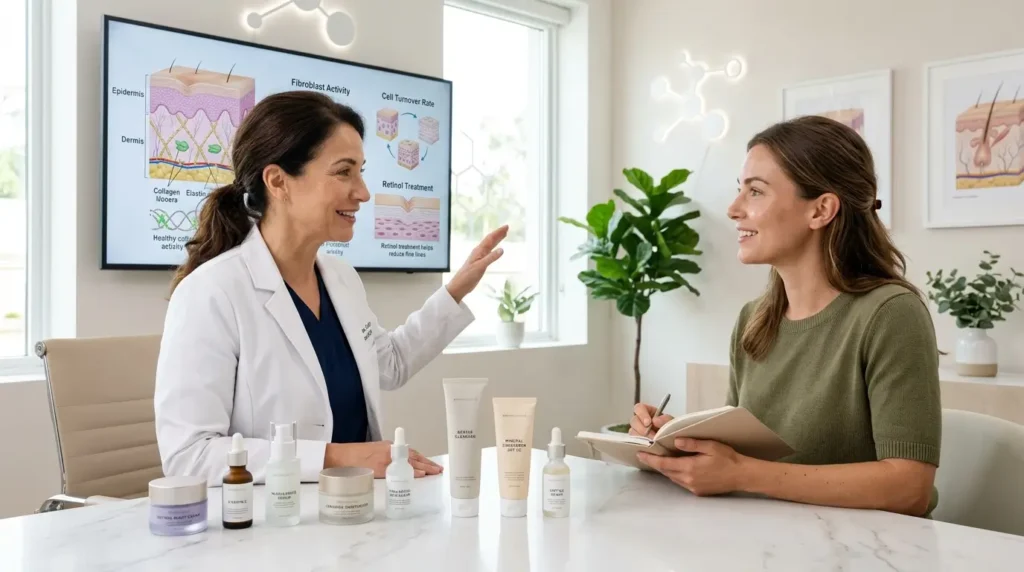
Retinol works. It is supported by science. You need to accept what happens and have your expectations managed. Start with a low concentration, slowly ramp up the frequency, and be sure to put on sunscreen to ensure the new skin is taken care of. If the over the counter treatments don’t work, you should see a local dermatologist for a prescription option.