Best Skincare Routine for Acne Prone Oily Skin
The ideal routine consists of a salicylic acid cleanser, a niacinamide serum, an oil-free gel moisturizer and a matte sunscreen. Steer clear of heavy creams and mechanical scrubs.
You wash your face. It is clean and squeaky clean. After two hours, you can fry an egg on your forehead. Your feet won’t find traction. When you look in the mirror you see new bumps under the skin. You suffer from oily and acne skin. A lot of people have this experience. Years of purchasing incorrect items. I used very strong scrubs which made my face red and tight. I didn’t use moisturizer, as I thought it would make me greasy. That was a mistake. You should water your skin. It must possess the proper balance between oil control and barrier protection. It is possible to clear your pores. The mid-day shine can be prevented. You should have a conventional step-by-step system.
Also Read: Why Do I Keep Breaking Out On My Chin And Jawline 2026
Why Oily Skin Gets Acne
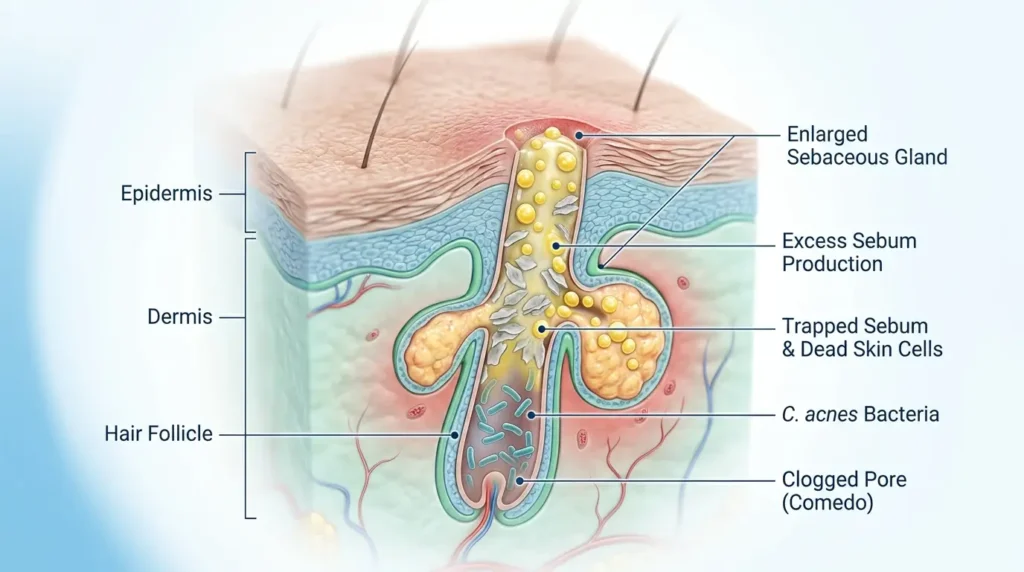
Sebum is made by your sebaceous glands. Sebum is an oily substance that protects your skin. Extra sebum combines with dead skin cells when the body produces too much of the former. This stuff is a pore blocker! Inside these clogged pores, a certain bacteria called Cutibacterium acnes grows and spreads. The bacteria are responsible for inflammation. This inflammation becomes blackheads, whiteheads and painful cysts.
You don’t have the power to alter your genes. The conditions of your skin are in your hands. The pores must be kept open. You need to reduce the excess oil. You can’t do this without compromising the integrity of your skin barrier.
Your skin also has a microbiome. This is a group of good bacteria. The harsh cleansers that you use when you strip your skin kill the good bacteria. Bad bacteria such as Cutibacterium acnes get the upper hand. It is necessary to maintain your acid mantle. The acid mantle is the thin layer of acid that covers your skin. Prevents the growth of harmful microorganisms. This layer is protected by a gentle, low-pH cleanser.
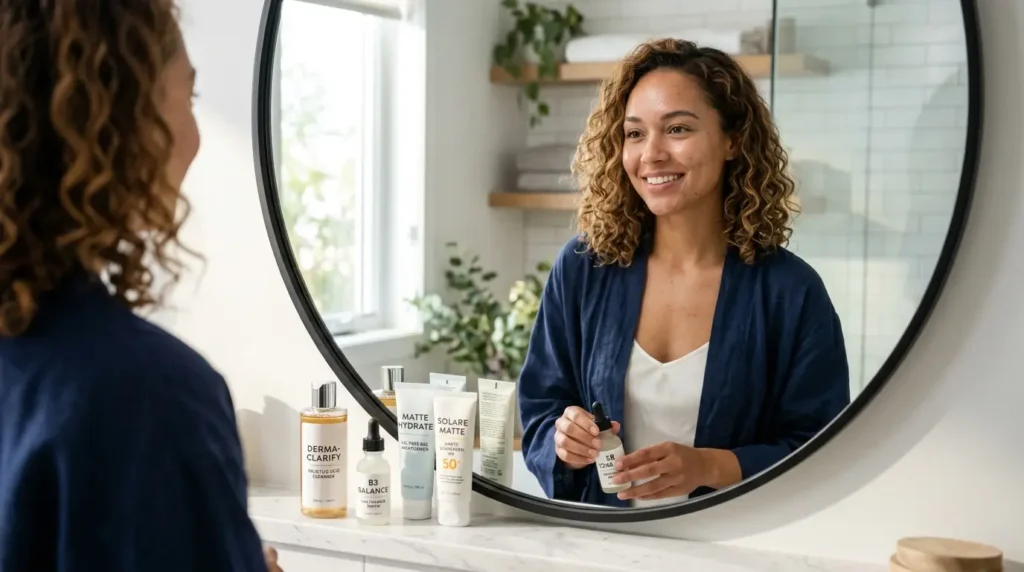
How to Choose Products by Acne Severity
Acne can show up in many different ways. The skin care regimen for a teenager with a few blackheads is different from that of an adult suffering from deep cystic acne. Match up your product strength with your symptoms.
Mild Breakouts and Surface Oil
Small bumps are present. You become shiny by the afternoon. You don’t have any deep and aching lumps. Use mild cleaning products and light oils. Here, niacinamide is effective. Treatment in prescription-strength is not necessary.
Moderate Acne and Persistent Shine
You’ve had a regular outbreak of acne problems. Your pores appear to be enlarged. Salicylic acid topically does help, but is not enough. A chemical exfoliant should be introduced. It is important to have an evening regimen of retinoids.
Severe Cystic Acne
Hard painful lumps under the skin. This can’t be corrected with topical products alone. A board-certified dermatologist is required. Oral medications may be necessary. The following routine is for clinical treatments. They assist with clinical therapies. They can’t replace them.
Morning Routine Steps
The first thing you will achieve in the morning is defense. What you need to do is eliminate the sebum which the skin has generated overnight. It’s important to shield your skin from the sun.
- Cleanse your face with a gentle gel cleanser. Use a salicylic acid cleanser for those who suffer from very oily skin.
- Apply a niacinamide serum. The derivative of vitamin B3 instructs your oil-producing sebaceous glands to reduce their production.
- Apply an oil-free gel moisturizer. Check the label for the words “non-comedogenic.” This ensures that it doesn’t clog your pores.
- Use a mineral (not chemical) sunscreen. Sun protection factor (SPF) 30 or higher is required. The sun makes acne scars darker.
Evening Routine Steps
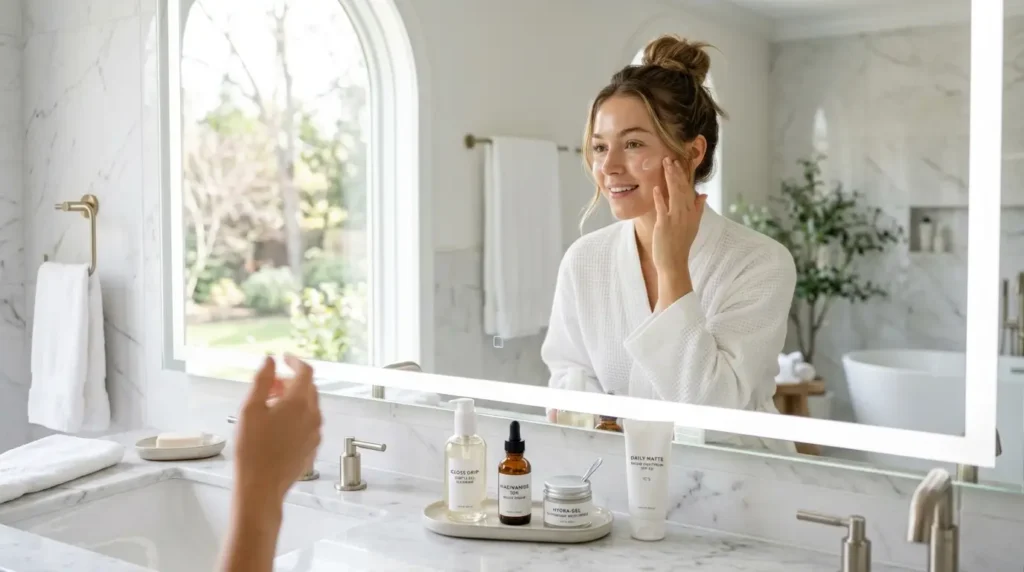
The aim of your evening is to repair and deep clean. Sunscreen, makeup and pollution have to be removed.
- Do double washing. Using a sunburn balm to soften the sunburn is a good way to begin. Rinse it off.
- Use a normal gel cleaner as your follow on. This means you don’t have to deal with any leftover on your skin during the night.
- Use a chemical exfoliant. Apply two or three times a week with a beta-hydroxy acid, such as salicylic acid. The other nights, apply a retinol treatment.
- Use a nighttime moisturizer that is water-based. During sleep your skin restores itself. It requires water to be able to perform this function.
Many dermatology clinics and med-spas create custom procedures for the people. They begin patients with a simple three-step regimen, and then introduce prescription tretinoin. This clinical method can be replicated at home. Learn the fundamentals of cleansing and moisturizing before. Mix in one ingredient at a time. This will avoid severe reactions.
Best Ingredients for Acne Prone Oily Skin
Product labels are a must read. Keep an eye out for these actives. These have good dermatological support.
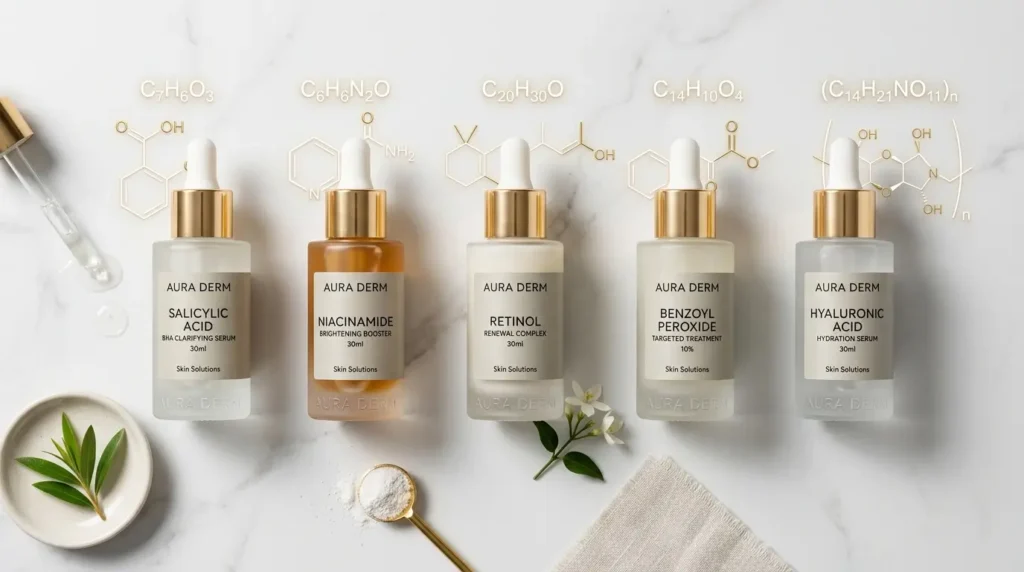
| Ingredient | Primary Function | Best Time to Use |
|---|---|---|
| Salicylic Acid | Unclogs pores | PM twice a week |
| Niacinamide | Decreases oil production | AM and PM |
| Retinol | Raises skin cell renewal rate | PM only |
| Benzoyl Peroxide | Kills acne bacteria | PM spot treatment |
| Hyaluronic Acid | Hydrates without oil | AM and PM |
Salicylic acid is a lipid-soluble acid. It goes directly through the sebum to the pore. Retinol stops your dead skin cells from sticking together. Benzoyl peroxide kills Cutibacterium acnes and creates the environment. Hyaluronic acid is a substance that attracts water to the skin. It contains no additional oil, and still supplies moisture.
Also Read: How To Get Rid Of Hormonal Acne Naturally 2026
Check the reverse of the bottle. So why does the FDA restrict the ingredients of over-the-counter acne drugs? Facial washes contain a maximum 2% of salicylic acid. The maximum concentration of benzoyl peroxide is 2.5 percent to 5 percent, which is nonprescription. Percentages higher will produce chemical burns. They don’t promote clearer skin. A 2.5% benzoyl peroxide gel is as effective at killing bacteria as the 10% formula. The 10% formula causes more peeling.
Gel Moisturizer vs Cream Moisturizer
Those who have oily skin do not like moisturizer. This is a mistake. Dry skin will secrete more oil to counteract its dryness. You must moisturize. The right texture is needed. The cream moisturizers are rich in oils and waxes. They are positioned on top of oily skin. They retain moisture and clog pores. Water is the base of gel moisturizers. Their absorption is instantaneous. These are matte-finish. Always use a gel formulation. Your face will thank you for it!
Common Mistakes That Make Acne Worse
I’ve been making most of these myself. Let’s learn from my lost cash!
- Over-exfoliating. If you use three different acid toners at night, you will ruin your skin barrier. This results in the loss of water through the skin (trans-epidermal water loss). You experience flaky, red skin on your face. It produces an overproduction of oil to repair some of the damage.
- Using physical scrubs. Walnut shells and sugar crystals may generate micro-tears in the skin. They spread bacteria on your face. Avoid using chemical exfoliants.
- Skipping sunscreen. UV rays lead to inflammation. Inflammation causes additional acne outbreaks. Apply a matte sunscreen every day.
- Dehydrating your skin. Alcohol-based astringents provide a ten-minute feel good. Rebound oil production starts after that. You come out in a whole new light.
- Taking no account of pH. The pH of your skin is in a natural range of 4.5 to 5.5. This acidic environment helps to control bacteria. Numerous inexpensive soaps have a pH of 9 or 10. Alkaline soap will destroy an acid mantle. Your skin takes hours to rebalance itself to its normal pH. Purchase pH-balanced or low-pH cleansers.
Understanding the Purge Phase
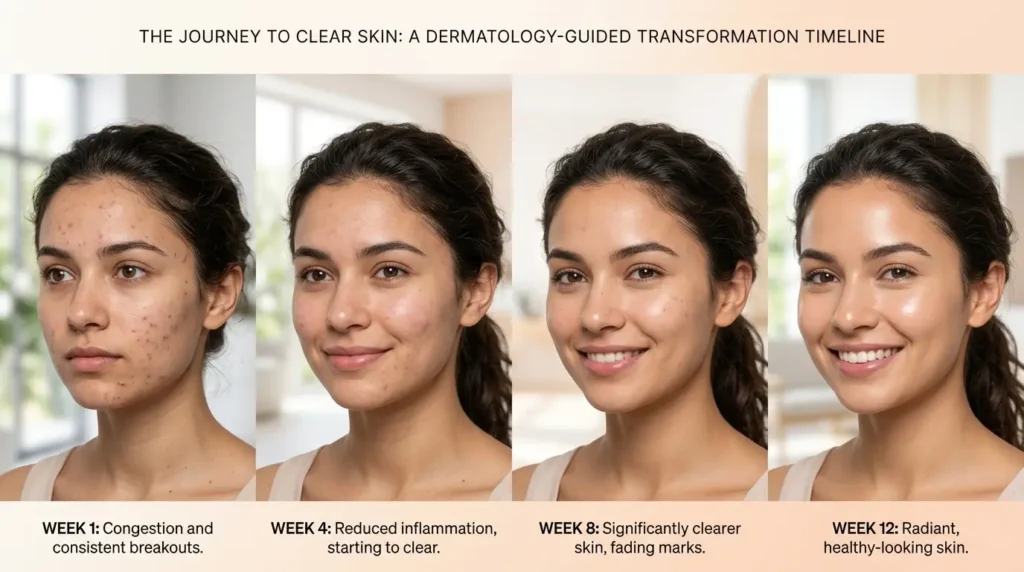
You begin a new retinol or salicylic acid treatment. After the first week, your skin is not any better. Remain calm. This is the “purge phase.” Retinoids promote skin cell renewal. They expel any trapped sebum and dead cells immediately. A purge resembles little bumps in areas where you normally get acne. Random is a true breakout. It’s in new locations. A purge takes three to six weeks. Keep going. Your skin will become clearer.
Adjusting Your Routine by Season
Your skin is a living organ. It is sensitive to the environment. Humidity rises in the summer. A lighter gel moisturizer may be necessary. The use of salicylic acid may be reduced to once a week if desired. During the winter months, heating in the home dries the air. A heavier lotion may be required. Strong retinoids may have to be temporarily discontinued for a few days. Pay attention to your skin. Don’t follow the calendar, tailor your schedule to how you feel on your face.
When to See a Dermatologist
There are limits to OTC routines. If acne doesn’t get better after eight weeks, book your appointment. Look for a “dermatologist for acne near me” or visit a local acne treatment clinic. Board-certified dermatologists offer tools that you can’t find at the store. They may be able to make injections to treat painful cysts. They may prescribe oral drugs such as spironolactone and tretinoin. The cost of a local consultation is $100 to $300 USD, depending on the location.
There are two primary factors that cause acne. If both of your parents had acne, you are most likely to get it as well. Your sebaceous glands are sensitive. Those breakouts that have a tendency to occur during stress or around the menstrual cycle are examples of hormonal acne. The topical skincare takes care of both types. Many times hormonal acne needs a doctor’s treatment which involves the inner body. Presence of hormones is responsible for the development of acne on the jawline if it breaks out every month.
Most of the regional pharmacy chains and med spas have a medical esthetician on staff that can do extractions. Avoid waiting until you have permanent scarring. When OTC products are ineffective, get professional assistance.
Cost of Building an Acne Routine
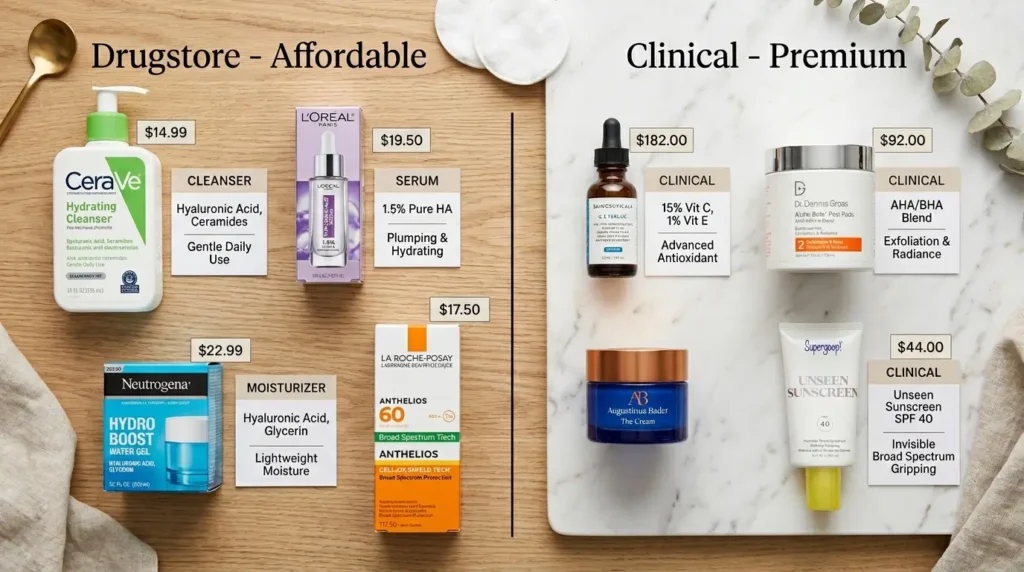
You don’t have to pay $200 for one bottle of serum! There are some great and effective formulations by drugstore brands. Elegant texture and packaging comes at a higher price for clinical brands.
| Product Type | Drugstore Cost | Clinical Brand Cost |
|---|---|---|
| Cleanser | $8 to $12 | $30 to $45 |
| Treatment Serum | $10 to $18 | $40 to $70 |
| Gel Moisturizer | $10 to $15 | $35 to $55 |
| Matte Sunscreen | $10 to $15 | $30 to $50 |
The total cost of a drugstore routine is approximately $40. The cost of a clinical routine is approximately $150. With the right ingredients, both can help clear up your skin. Pay for the active ingredients. Don’t pay attention to marketing claims on the front page of the bottle.
Frequently Asked Questions
Can oily acne prone skin use moisturizer?
Yes. Avoiding moisturizer causes you to become dehydrated. When skin is dry, it creates extra oil to replace it. Apply a moisturizer that is made of gel and free of oil.
What ingredients should oily skin avoid?
Do not use coconut oil, mineral oil, cocoa butter or alcohol denat. These ingredients can block pores or remove the barrier from your skin.
How many steps should an oily skin routine have?
It takes four steps in the morning and four at night. Wash, treat, moisturize and guard from the sun in the morning. Double clean, treat and moisturize at night.
Why is my oily skin dry and breaking out?
You over-exfoliated. Your skin barrier is compromised with harsh acids and rough scrubbing. This forces the flaking and elicits rebound oil production.
Can I use Vitamin C with salicylic acid?
Yes. Apply a Vitamin C serum in the morning — water based is best. Incorporate salicylic acid into your nightly skin care regimen. They do not mix well, and can cause irritation when mixed together in the same application.
How do I patch test a new acne product?
Put just behind the ear or down your jaw line. Wait 24 hours. If it is red or feels hot on the skin, return it.
Do acne products expire?
Yes. Look for the symbol for “Period after opening” on the cap. It is similar to a small jar with a number in it. The number represents the number of months it will last after opening. Active ingredients such as salicylic acid can become ineffective with time.
Also Read: How To Layer Skincare Products In The Right Order 2026
Conclusion
Avoid harsh scrubs, or drying alcohol as a way to combat your skin. Establish a pattern that suits your body. Clear pores with a salicylic acid cleanser. Topically treat with niacinamide to reduce sebum. Use a water-based gel moisturizer for hydration. Use a matte sunscreen on skin. Allow eight weeks for the routine to take effect. Skip the purge phase when beginning retinol. If the cystic acne still doesn’t go away, grab that cell phone and make an appointment with a neighborhood dermatologist. Now you have the right information. Put it to use.