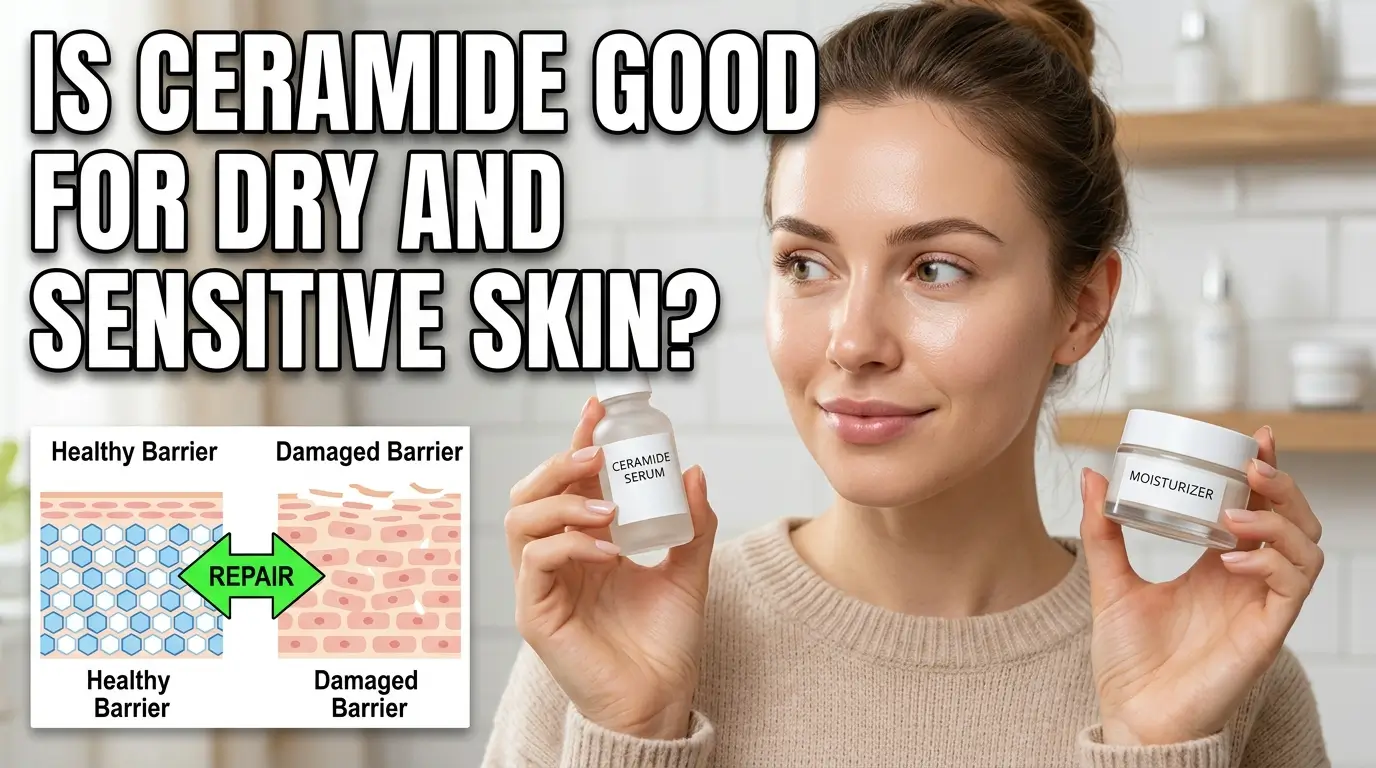
You wash your face and it feels tight after 10 minutes. Heavy moisturiser, but it hurts. At noon, skin is flaky and red. This is a very tiring cycle. Most people credit weather or their cleanser. The actual issue is located deeper within the skin. Holes in your lipid barrier. For years, I’ve experimented with rich creams on my face. It wasn’t until I began to seek structure and stop seeking moisture that anything changed. This is where ceramides fit into the equation. If you’ve ever wondered is ceramide good for dry and sensitive skin, this is where the answer begins.
What Are Ceramides
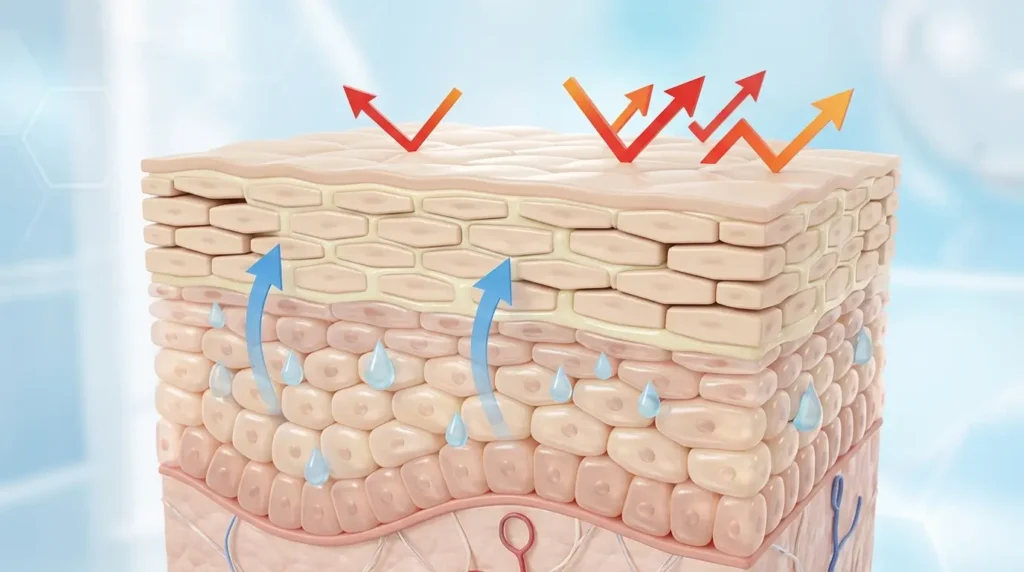
Ceramides are fatty substances present in the outermost layer of the skin, the stratum corneum, more than half. They are the “mortar” between your skin cells that helps hold everything together, keeping moisture in and irritants out.
Also Read: How To Use Retinol For The First Time Without Irritation 2026
If they are not present, water drains through the cracks. This is known as transepidermal water loss or TEWL. A corneometer is the tool dermatists use to measure TEWL to determine barrier damage. Dry skin is the result of water loss. As irritants enter into those cracks, it becomes sensitive.
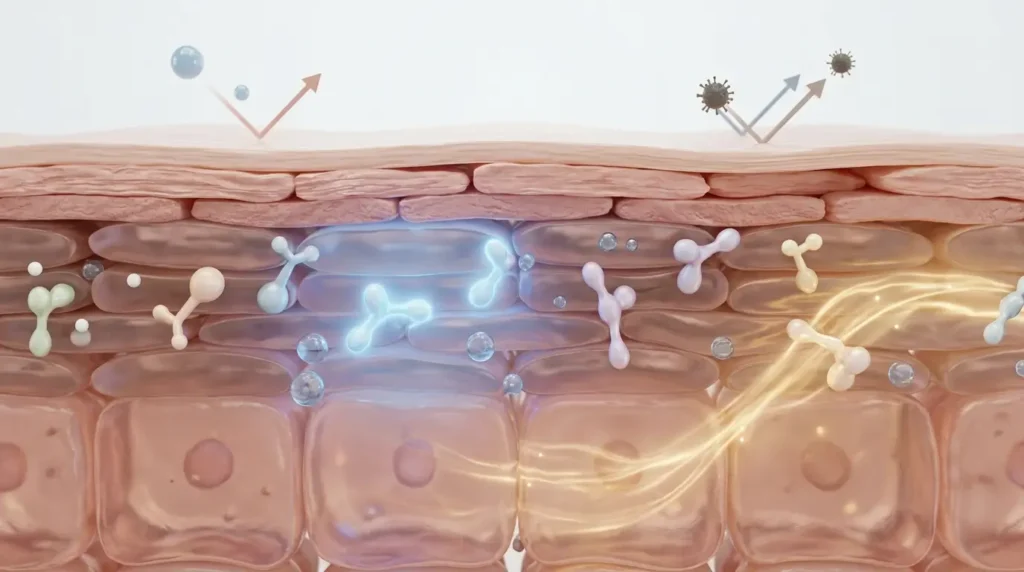
Small sacs in your skin cells are called lamellar bodies. The sacs make their way to the surface and expel lipids to create the barrier. This secretion process fails in the case of eczema and rosacea. Topical ceramides are the direct replacement for the missing lamellar secretions.
The 3:1:1 Lipid Ratio
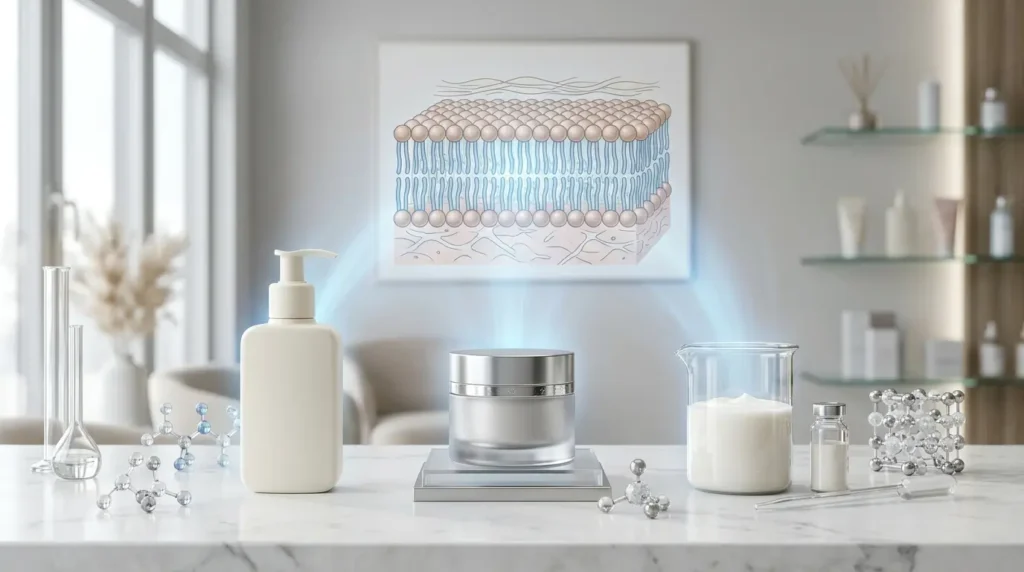
Ceramides are not the only requirements for skin. A healthy barrier requires a certain ratio of ceramides, cholesterol and free fatty acids. The ratio is three ceramides, one cholesterol and one free fatty acids.
The ratio is what formulators at companies such as Croda International and Evonik develop their raw materials. The ceramides are unable to assemble the correct lipid bilayer if the brand omits the cholesterol or the fatty acids. The product fails. Ten percent ceramide concentrate can be stored in a jar but, if not mixed with supporting lipids, it will do nothing.
Ceramide Types and What They Do
There are 9 different families of ceramides in the stratum corneum. Synthetic and plant-based alternatives to mimic human biology are employed in skincare formulations. On the labels of ingredients you’ll find these numbers. A product containing only one type may be of some minor assistance. A combination of AP, NP and EOP is similar to human biology and more effective.
| Ceramide Type | Function |
|---|---|
| Ceramide AP | Repairs lipid matrix |
| Ceramide NP | Reduces inflammation in the skin |
| Ceramide EOP | Helps prevent water loss |
| Phytosphingosine | Activates the body’s production of it |
Search for INCI ingredients such as Ceramide NP or Ceramide AP, which are located near the beginning of the list, rather than at the end. There are differences between the INCI naming rules of the EU and the US. In the USA, it is called “Ceramide NP”. You may find the term “Ceramide 3” in the EU. They are identical molecules. If you are purchasing the raw materials for formulations you will need to compare these names to receive the correct chain length.
Also Read: Can You Mix Vitamin C And Niacinamide Together 2026
Why Ceramide for Dry Skin Works Better Than Hyaluronic Acid
The people think hydrators are barrier builders. Hyaluronic acid is an ingredient that attracts water. It is able to collect water from the atmosphere and draw it into the skin. Ceramides are lipids. They create a seal to prevent that water from being lost by evaporation.
| Feature | Ceramides | Hyaluronic Acid |
|---|---|---|
| Type | Lipid | Humectant |
| Job | Seals moisture | Attracts moisture |
| Best For | Damaged barriers | Plumping surface layers |
When a damaged barrier is applied with HA, the water will be carried away by the dry air. It can cause tight skin to feel tighter. The lipid seal must be applied first. Then the humectant is effective.
How to Read a Product Label
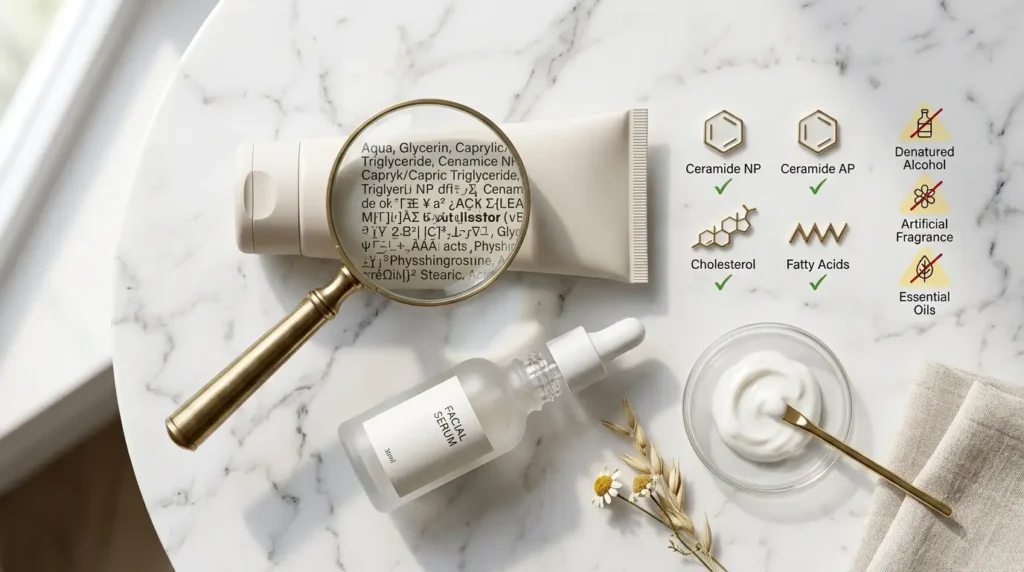
Marketing of skincare is confusing. The word “ceramide enriched” can be on a bottle, and a useless sprinkling of the ingredient could be there. When shopping, refer to this checklist.
- Look for the top five ingredients that include ceramides, cholesterol and fatty acids.
- Don’t use drying alcohols such as denatured alcohol from the top of the bottle.
- Skip added fragrances and essential oils.
- Be sure to check the words “bioidentical” or find the INCI code Ceramide AP.
The biggest challenge for ceramides for formulating is that they don’t dissolve in water. These lipids are hard to dislodge. They have a high melting point and are not easily blended into water based formulas. Complex delivery systems such as liposomes or emulsions are used to deliver them into a serum by brands. The formula will separate if the jar is used with the incorrect 3:1:1 ratio, and the product will not be made.
The Fungal Acne Warning
This is one area that most skincare tips lack. If you’ve got tiny, even-looking pimples on the skin of your forehead or cheeks, you may have malassezia folliculitis. The yeast is a species that eats a certain type of fatty acids.
Oleic acid is a fatty acid that is present in many ceramide moisturizers. Oleic acid feeds this yeast and makes fungal acne worse. In this case, you’ll have to find ceramide products with linoleic acid. Malassezia cannot be cultured on linoleic acid. Soothes inflammation. Read the INCI list. When it is listed at the top, heed it and return the jar to the shelf.
How to Apply Ceramides for Barrier Repair
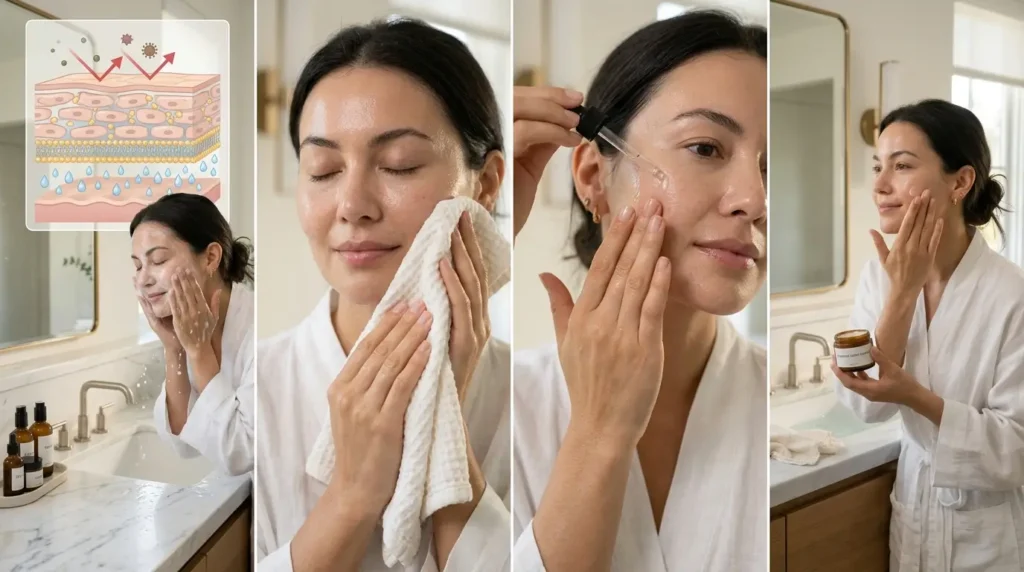
Application order matters. A ceramide serum is applied over dead cells, which entices debris.
- Wash with a mild low pH cleaner.
- Pat your face dry. Keep slightly moist.
- Use a ceramide serum or cream on your skin.
- If you live in a cold climate, apply a petroleum jelly to the skin.
Apply ceramides to dry skin and they don’t get water to bind to. There is no need to add water to the skin since the amount of water supplied by the damp skin itself is enough. The ceramides serve as a seal.
The barrier is broken by people using retinol. Retinol accelerates turnover of cells but removes lipids along with them. It’s best to use retinol on clean, dry skin. Let it absorb. Next apply the ceramide cream over that. The retinol will not be blocked by the ceramides but they will prevent extreme peeling and stinging.
Climate and Format Choices
The formula you use depends on your geography. During cold and dry winter, a thick cream is good. The same cream in a humid, tropical setting will clog up the pores and lead to acne.
Also Read: What Does Glycolic Acid Do For Your Skin 2026
For people in a humid area, choose lightweight ceramide gels. Use heavy ceramide balms in a jar in dry northern climates. A good formula that can be found locally avoids shipping, and enables you to experiment with the texture. Rheumatologists recommend that patients visit the CVS or Target aisles in the United States. Boots has several pharmacy grade alternatives in the UK. Watsons sells light ceramide gel in Asia which are formulated for use in high humidity. A search for dermatologist in your particular city will give you clinics in your area that sell medical barrier cream in the waiting room.
Pricing Expectations
Here quality isn’t determined by the price. The raw materials used in drugstore brands owned by leading pharmaceutical companies are the same employed with luxury brands. The packaging and the fragrance come at a price.
| Category | Price Range |
|---|---|
| Drugstore | $12 to $20 |
| Luxury | $50 to $120 |
| B2B Bulk | kg varying |
Bulk raw ceramide pricing is dependent on the chain length and supplier minimums for B2B formulators. AP is pure ceramide that is more expensive than generic sphingolipid blend.
Common Mistakes to Avoid
Exfoliating when barrier is down. Discontinue any acids and scrubs for 3 weeks. The damaged wall cannot be smoothed. It needs to be re-built first.
Expecting overnight results. The secretion of lamellar bodies is a slow process. Real structural repair will occur in approximately 4 weeks. It feels better on day 1 due to surface hydration. The redness and stinging lasts for one month.
When applied over an open wound. Ceramides for healthy yet damaged skin. Open lesions should be medically treated by a board certified dermatologist. Don’t apply any OTC moisturizer to weeping eczema.
Frequently Asked Questions
Are Ceramides Safe for Highly Sensitive Skin?
Yes. They have the identical consistency with human skin. You have these in your body already! The absence of fragrances and preservatives that are too harsh is another key factor in ensuring a free-of-reaction product that is pure ceramide.
What Percentage of Ceramides Is Effective?
The concentration of most over the counter creams is 0.1% to 1%. The ratio of 3:1:1 with cholesterol and fatty acids is more important than the percentage. A combination of a low percentage and the correct ratio is superior to a high percentage alone.
Should I Use Ceramides Morning or Night?
Can be used twice. Use a lighter ceramide serum in the morning before applying sun lotion. Apply a heavier ceramide cream at night to help retain moisture during sleep.
Can I Mix Ceramides With Vitamin C?
Yes. Vitamin C is an antioxidant. The barrier is repaired by ceramides. They don’t get in conflict with each other. Apply the Vitamin C first, then the ceramide moisturizer.
How Long Do Ceramides Take to Repair Skin Barrier?
Symptoms of surface hydration are more comfortable on day one. It takes 3 to 4 weeks of daily use to structurally repair the stratum corneum.
Can Ceramides Cause Breakouts on Dry Skin?
Pure ceramides don’t clog pores. They may be suspended in a cream using heavy oils. In case of acne, use a water-based ceramide gel.
Do Ceramides Help With Rosacea?
Yes. The barrier is weak, allowing irritants to enter, in rosacea. Over time, ceramides prevent these irritants and minimize redness. They are common ingredients of rosacea treatment.
How Do Ceramides Differ From Petrolatum?
Petrolatum is an occlusive agent which lies on the top of the skin. Ceramides form a part of the skin cells and strengthen the skin’s structure. Petrolatum keeps water out, ceramides strengthen it.

It takes time to treat dry, sensitive skin. It’s time to stop scrubbing your face with severe cleanses and let the biology recover. The easy part is done with a thoroughly formulated ceramide product, and one specifically suited to your climate, which happens to be checked for the proper fatty acids. Take note of the INCI list. Don’t read the front of the bottle. You will get results if you give your skin the exact materials that it requires to protect itself.