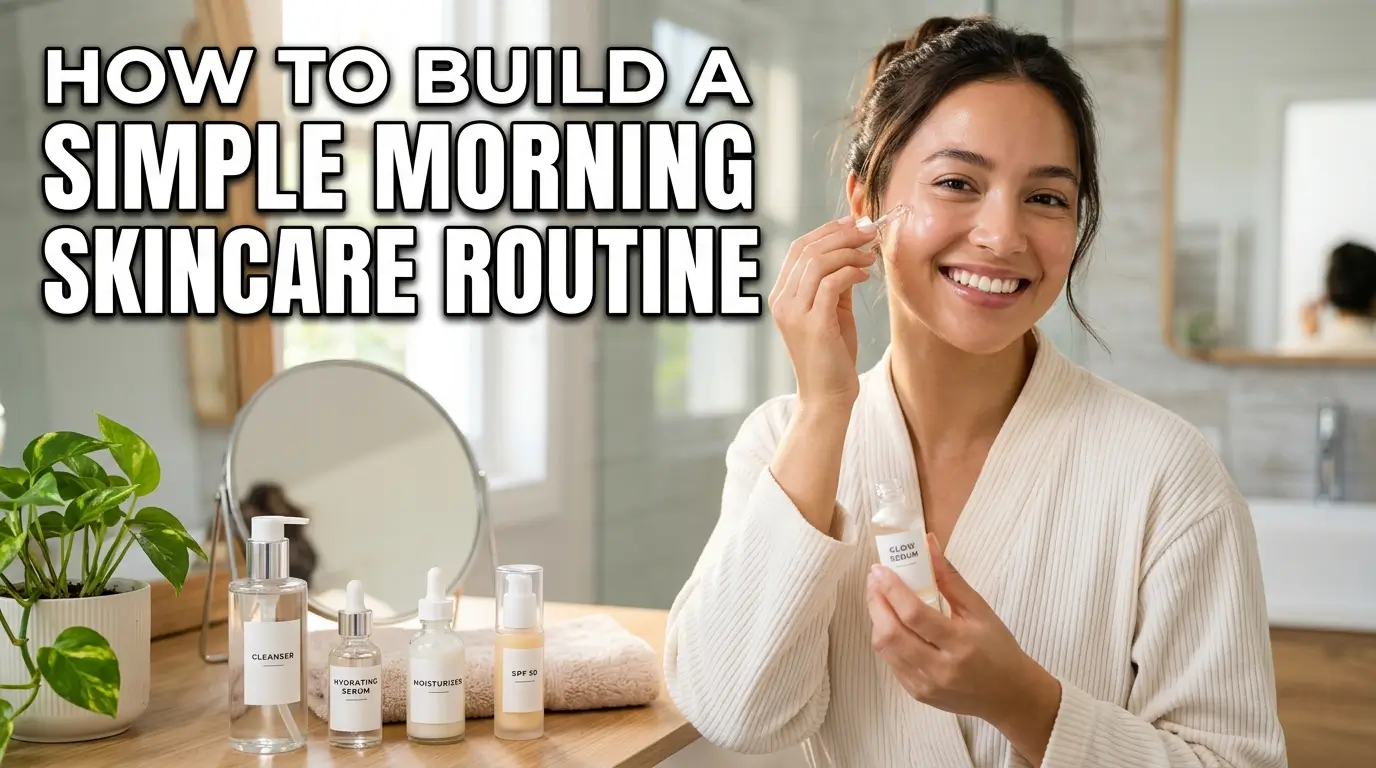
How to Build a Simple Morning Skincare Routine
I had zero skincare routine for most of my twenties. I’d splash water on my face, maybe run a bar of soap across it if I felt fancy, and walk out the door. My skin wasn’t terrible — but it wasn’t great either. Dull, a little dry around the nose, oily by noon.
The turning point wasn’t some luxury product. It was realizing I’d been skipping sunscreen every single day for years. That one change — adding an SPF in the morning — made more visible difference in three months than anything else I’d tried.
If you’re starting from zero, or you’ve tried “skincare” before and abandoned it because it felt like a second job, this is for you.
Why Morning Skincare Is Different from Night
Most people don’t realize that morning and evening routines have completely different jobs.
At night, your skin repairs itself. That’s when you use actives — retinol, exfoliating acids, heavy treatments. Your skin is in recovery mode.
In the morning, your job is protection. You’re about to walk into UV radiation, pollution, blue light from screens, and hours of environmental stress. Your routine needs to build a shield, not strip your skin down.
This is also why certain ingredients — retinol, AHAs like glycolic acid, BHAs like salicylic acid — belong at night. In sunlight, they either degrade or make your skin more sensitive to UV damage. Using them in the morning cancels out their benefits and adds risk.
Keep the morning simple. Protect. Hydrate. Seal.

The 4 Steps You Actually Need
A morning routine doesn’t need to be 10 products. These four steps cover everything:
- Cleanser — removes oil, sweat, and bacteria from overnight
- Toner — optional, but useful for hydration or balancing pH
- Moisturizer — hydrates and preps skin for the day
- Sunscreen — the non-negotiable final step
That’s it. Four products, roughly five minutes. Everything else — serums, essences, eye creams — gets added later if you want to target a specific concern.
Step 1: Cleanser
Wash your face with lukewarm water and a gentle cleanser. Not hot water — it strips your skin’s natural lipid barrier and leaves skin dry and reactive.
Massage for about 30 seconds. Pat dry with a clean towel.
What type to use:
| Skin Type | Cleanser Type |
|---|---|
| Oily / acne-prone | Foaming or gel |
| Dry / sensitive | Cream or milk |
| Combination | Balanced gel |
| Sensitive | Micellar water |
If you have very dry or sensitive skin, some dermatologists say a water rinse in the morning is enough — especially if you cleansed well the night before. Over-cleansing is a real problem. It doesn’t make your skin cleaner; it makes it angry.

Step 2: Toner
Toners have a bad reputation from the alcohol-heavy astringents of the 90s. Modern toners are different. The good ones add hydration, rebalance skin pH after cleansing, and deliver ingredients like niacinamide or hyaluronic acid fast.
Also Read: Difference Between Toner And Essence For Beginners
That said — toner is optional. If you skip it, your routine still works.
If you do use one, keep exfoliating toners (AHA/BHA) for the evening. In the morning, use something hydrating. Pat it in with your hands rather than wiping with a cotton pad — you waste less product and cause less friction.
Step 3: Moisturizer
Apply moisturizer while your skin is still slightly damp. It helps lock water in rather than pulling from deeper layers.
Moisturizers work through three mechanisms:
- Humectants draw water in (hyaluronic acid, glycerin, aloe vera)
- Emollients smooth texture and fill gaps in the skin barrier (squalane, fatty alcohols)
- Occlusives form a seal to prevent water leaving (shea butter, petrolatum)
A good moisturizer uses all three. You don’t need to memorize the science — just look for ceramides or hyaluronic acid on the label, and match the texture to your skin type.
Gel moisturizers for oily skin. Creams for dry skin. Lotions for combination or normal.
Step 4: Sunscreen
This is the one step that matters more than everything else combined.
The American Academy of Dermatology recommends SPF 30 minimum, broad-spectrum, every day. Broad-spectrum means it blocks both UVA (aging, pigmentation) and UVB (burning) rays.
SPF 50 blocks about 98% of UVB rays. SPF 30 blocks about 97%. The difference is smaller than most people expect — but consistent daily use matters far more than picking the highest number.
Mineral vs. chemical:
| Type | How It Works | Best For |
|---|---|---|
| Mineral (zinc oxide) | Reflects UV | Sensitive, reactive skin |
| Chemical | Absorbs UV | Oily, normal skin |
| Hybrid | Both | Most skin types |
Apply SPF as the absolute last step in your skincare routine, after moisturizer. If you’re going outdoors, reapply every two hours. Clouds don’t stop UV — up to 80% of rays still get through on overcast days.
One honest note: finding a sunscreen you like takes trial. Some leave a white cast. Some feel greasy. Some pill under makeup. Budget $15–$20 and try a few before committing to a full bottle.
Building Your Routine by Skin Type
Oily Skin
The mistake most people with oily skin make is skipping moisturizer because their skin already feels greasy. Oily skin isn’t the same as hydrated skin. When you skip moisturizer, your skin often produces more oil to compensate.
Use a foaming cleanser, a niacinamide toner (niacinamide reduces sebum production and pore appearance), and an oil-free gel moisturizer. Finish with a matte-finish SPF 50.
Dry Skin
Dry skin needs hydration layering. A cream cleanser, a hydrating toner, a rich moisturizer with ceramides, and an SPF that has moisturizing properties built in.
Avoid anything with alcohol high on the ingredients list. Avoid foaming cleansers.
Sensitive Skin
Keep the ingredient list short. The fewer products, the lower the reaction risk. Fragrance is one of the most common irritants in skincare — avoid it where possible.
Try a fragrance-free micellar water instead of a traditional cleanser. Use a ceramide-based moisturizer. Choose mineral sunscreen (zinc oxide) over chemical — it’s less likely to sting.
Combination Skin
The T-zone (forehead, nose, chin) runs oily while the cheeks stay dry or normal. A balanced gel cleanser, lightweight lotion, and fluid SPF work well without overloading either zone.
If You’re Starting from Nothing
Don’t try to build the full routine on day one.
Start with three products: a gentle cleanser, a basic moisturizer, and an SPF 30+. Use those every morning for 30 days. That’s it.
After 30 days, if things feel stable, add a hydrating toner. After 60–90 days, if you want to target a specific concern (brightening, acne, dullness), introduce a single serum.
The reason for this slow build is simple: if you add five new products at once and your skin breaks out, you have no idea which one caused it.
CeraVe, Neutrogena, and La Roche-Posay are all solid starting points. Their products are widely available, priced around $8–$18 each, formulated with minimal irritants, and recommended by dermatologists. You can build a full four-step morning routine for under $40.
Premium brands aren’t necessarily better — they’re often better packaged. Spend your money on sunscreen quality before anything else.
For Men
Men’s skin is generally thicker and oilier due to higher androgen levels. Daily shaving also creates micro-irritation that most skincare advice ignores.
The routine is the same four steps. The difference is texture preference — lighter feels better for most men — and the addition of a post-shave balm or calming toner if shaving causes redness.
The biggest mistake men make is equating oily skin with skin that doesn’t need moisturizer. It does. An oil-free gel moisturizer takes 10 seconds to apply and makes a real difference by midday.
For Teens
Teen skin is hormonally active, which means oil production is high and breakouts are common. The instinct is often to hit skin hard — strong cleansers, multiple acne treatments, skipping moisturizer to dry things out.
That approach usually makes things worse.
A gentle foaming cleanser twice a day, a niacinamide toner, a lightweight oil-free moisturizer, and SPF 50 covers everything a teenager needs. Avoid harsh physical scrubs. Don’t pick at blemishes. And start the sunscreen habit now — it’s one of the most valuable things you can do for your skin long-term.
Climate Makes a Difference
Where you live changes what products work best.
In hot, humid climates — South Asia, Southeast Asia, tropical regions — heavy creams feel suffocating and increase congestion. Gel moisturizers, water-resistant SPF, and non-comedogenic formulas work far better.
In hot, dry climates — the Middle East, arid inland regions — your skin loses water fast throughout the day. Layer a hydrating toner before your moisturizer and look for SPF that also hydrates.
In cold climates — Northern Europe, Canada, high altitude areas — focus on barrier repair. Cream cleansers, richer moisturizers, and SPF 30 year-round (UV still reaches you in winter, especially reflected off snow).
Mistakes Worth Knowing About
Applying products in the wrong order. Thinnest to thickest. Watery serums first, moisturizer second, SPF always last. Applying SPF before moisturizer buries the UV filters and reduces their effectiveness.
Not waiting between layers. 30 seconds between each product is enough. Just let the previous layer settle before moving on.
Stopping too early. Most skincare products need 4–8 weeks of consistent use before you see results. A week isn’t enough to judge anything.
Using retinol in the morning. Retinol degrades in sunlight and significantly increases photosensitivity. Save it for your evening routine.
Applying SPF only to your face. The neck, ears, and backs of hands get the same sun exposure and are frequently forgotten.
Morning Routine Checklist
- Cleanse with lukewarm water
- Apply toner if using (pat in, don’t rub)
- Apply moisturizer to slightly damp skin
- Apply SPF 30+ as the final step
- Wait 2–3 minutes before makeup
- Reapply SPF every 2 hours if outdoors
FAQs
Do I need to wash my face in the morning if I cleansed at night?
If you have normal or dry skin, rinsing with water is often enough. If your skin is oily or acne-prone, a gentle cleanser in the morning removes the sebum and bacteria that built up overnight. Over-cleansing is a real concern — twice a day with a harsh cleanser will irritate most skin types.
What order do I apply my morning skincare products?
Cleanser first, then toner if you use one, then any serum, then moisturizer, then sunscreen. The rule is thinnest to thickest consistency. Sunscreen always goes last.
Is toner actually necessary?
No. Toner is optional. A hydrating toner adds a useful moisture layer and helps active ingredients absorb, but your skin won’t suffer without one. If you’re starting out, skip it and build the habit with three core products first.
Can I use vitamin C in the morning?
Yes — morning is actually the best time for vitamin C. As an antioxidant, it neutralizes free radicals from UV exposure and pollution, and it works well under SPF. Apply it after cleansing and before moisturizer.
Should I moisturize before SPF?
Yes. Moisturizer goes on first, then sunscreen on top. Some people use a moisturizing SPF as a 2-in-1, which works fine for normal or slightly dry skin. For very dry skin, a separate moisturizer first gives better hydration.
How much should a basic morning routine cost?
You can build an effective four-step routine for $30–$45 total using drugstore brands. A CeraVe cleanser runs about $12, a basic moisturizer around $15, and a decent SPF 50 for $10–$15. You don’t need to spend more than that to get results.
Is it really necessary to wear SPF every single day?
Yes. UV rays penetrate clouds, windows, and cause cumulative damage regardless of whether you feel them. The AAD recommends daily SPF use as the single most evidence-backed skin protection and anti-aging measure available. Every dermatologist I’ve read agrees on this one.
A Note Before You Start
The hardest part isn’t finding the right products. It’s doing the same four steps every morning until it becomes automatic — probably three to four weeks.
Pick the simplest possible starting point: one cleanser, one moisturizer, one SPF. Not the best ones. Just ones that are gentle and easy to grab. Build the habit first. Upgrade later once the routine sticks.
Your skin doesn’t need much. It needs consistency.