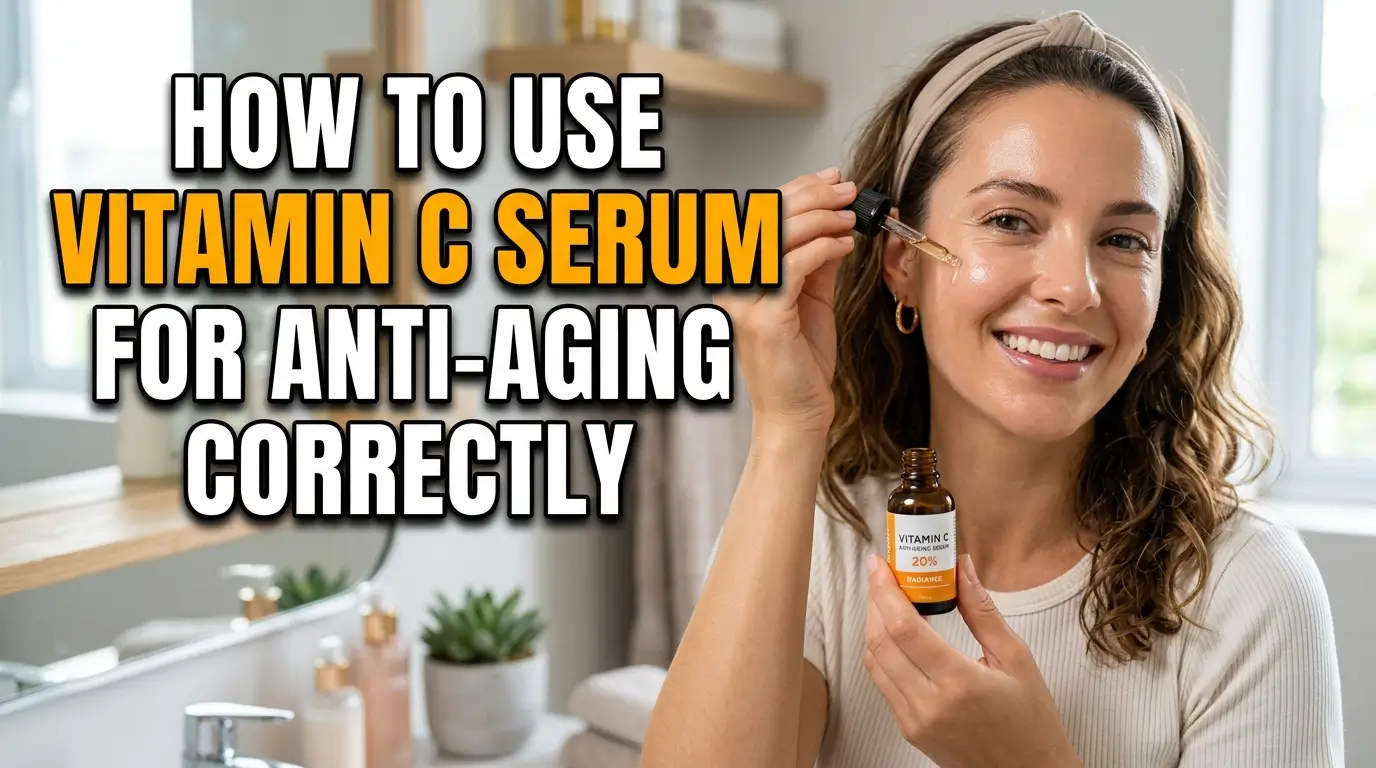
I got the first, super expensive Vitamin C serum for $80 and didn’t use it for three weeks before it looked like a pumpkin. Clinging to my bathroom counter, it slowly deteriorated until it simply lost its usefulness as I continued to apply it to my face and wondered why my skin felt irritated and not radiant. Learning how to use vitamin C serum for anti aging correctly would have saved me time and money.
The majority of people are mishandling Vitamin C. They use it at the wrong time, add the wrong ingredients to it or purchase a form that doesn’t actually penetrate the skin barrier. To prevent photoaging and see a difference in the fine lines, you need to think of this ingredient as the volatile chemistry experiment it is. That’s exactly how to use vitamin C serum for anti aging correctly for the best long-term results.

How Vitamin C Fights Aging
Oxidative stress is a problem that occurs in your skin every time you step outdoors. Free radicals are formed due to UV radiation and pollution. They are unstable molecules which are able to steal electrons from your skin, which in turn damages your collagen and elastin.
Also Read: How To Shrink A Pimple Overnight Without Popping It 2026
Vitamin C is an antioxidant that gives an electron to these free radicals, which they will use to neutralize the free radicals before they cause any damage to your dermal structure. It is also a tyrosinase inhibitor. This is a fancy term for it is a blocker of the enzyme that produces dark spots. This results in enhanced collagen production and an even skin tone over time.
The Application Order That Actually Works
The worst thing one can do is put serum on any time they remember. The order of the ingredients in the formula can mean the difference between reaching the deeper layers of your skin or resting on its surface and becoming a “pill”.
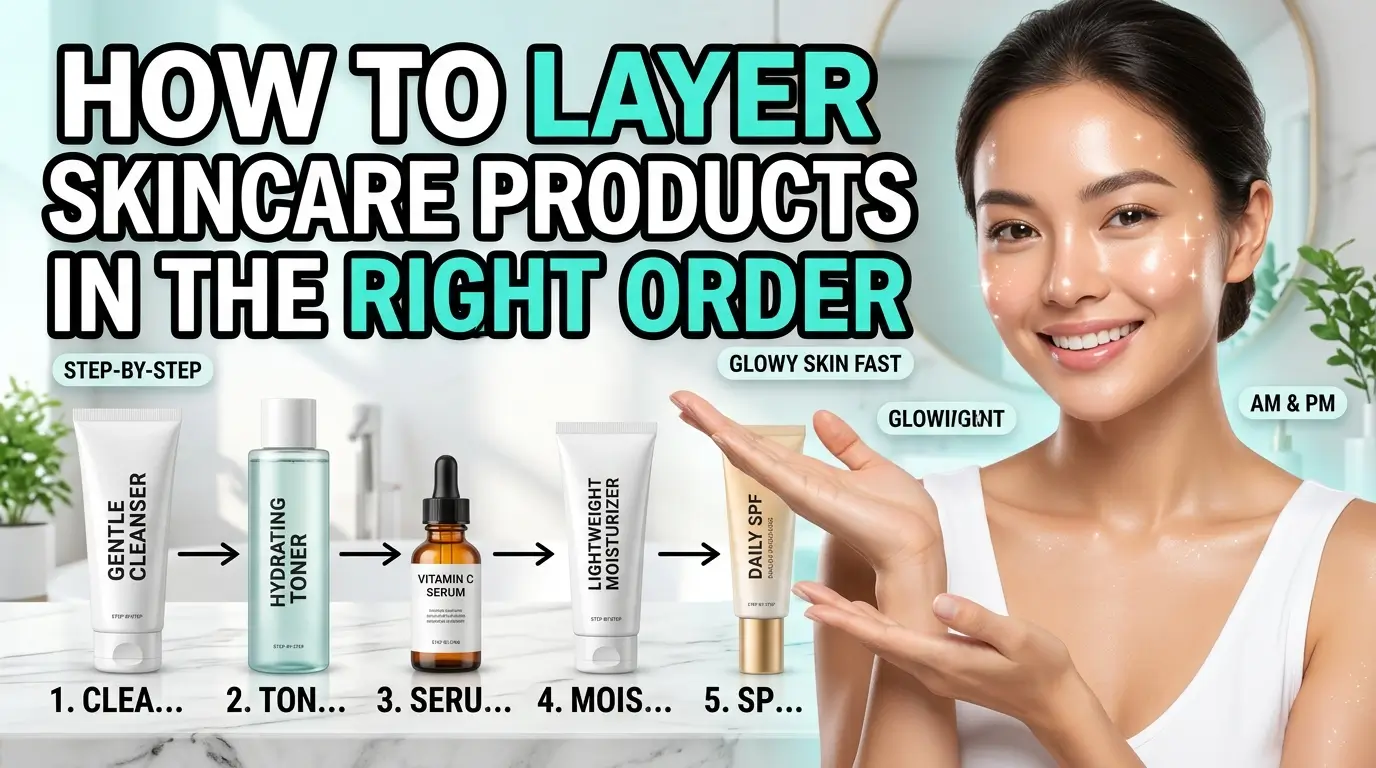
- Cleanse your face. Use a mild, pH-balanced soap. The Vitamin C is not well absorbed if the skin is too alkaline.
- Dry skin thoroughly. I used to put serum on to my skin when it was damp skin, believing it would “lock in moisture.” This is a wrongful thing to do with Vitamin C. The serum may penetrate too deeply into the skin causing stinging and redness.
- Apply 3 to 5 drops. Don’t need a full dropper. Apply to face, neck and chest.
- Wait 60 seconds. This is a “pH stabilization” window. If you apply a moisturizer with a different pH level to your skin after applying vitamin C, it needs time to get absorbed.
- Moisturize. This will keep the serum in.
- Use a sun protection factor (SPF) of 15 or higher. This is non-negotiable. Vitamin C and sun cream really are a force to be reckoned with. The serum traps the free radicals not captured by the sunscreen.
Choosing Your Concentration
If it is your first time using this, do not begin with a 20% concentration. You’ll be left with a red, itchy face.
The optimum anti-aging range is 10–15%. PubMed data indicates that beyond about 20%, it is unlikely that more will be absorbed, but the irritation will increase.
| Concentration | Target Audience | Expected Result |
|---|---|---|
| 5% to 10% | Sensitive skin / Beginners | Mild brightening |
| 15% | Standard anti-aging | Collagen boost |
| 20% | Resilient / Oily skin | Maximum pigment correction |
Pure L-Ascorbic Acid vs Derivatives
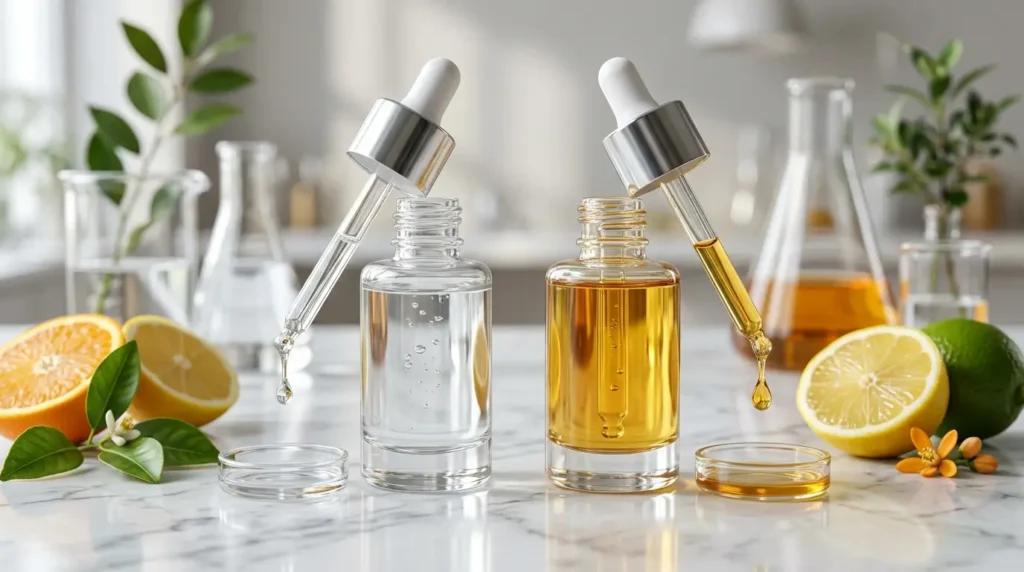
This is usually in the form of L-ascorbic acid. It is the gold standard, because it’s bioavailable, meaning your skin knows what to do with it immediately. The drawback is that it’s very unstable.
When using for sensitive skin, you should use THD Ascorbate (Tetrahexyldecyl Ascorbate). It’s an oil-soluble version. Much more stable and can penetrate skin more readily, without the need for super low pH. It tastes more like a light oil than a watery stingy oil.
Also Read: Salicylic Acid Or Benzoyl Peroxide: Better For Acne 2026
The Storage Science
Dispose of any serum in a clear glass bottle. Vitamin C will be destroyed by light so look for amber glass or preferably airless pumps.
I store my serum in a dark drawer, the fridge works for some people. The low temperature will reduce the oxidation rate, which is why your serum lasts longer. When the liquid is darkened in color to yellow or orange, the L-ascorbic acid has been converted into dehydroascorbic acid. You are literally applying pro-oxidants to your face at this stage that could be the very things that are damaging it.
The Smell and Texture Reality
The best Vitamin C serums have an unusual aroma. Others refer to it as “hot dog water” or “metallic copper.” This is typically from Ferulic acid added to the formula as stabilizer. It’s a nuisance but it indicates that the formula is active.
If the serum is gritty, then it is not properly formulated. It should be a very light oil that sinks in, like a thin liquid, within a minute. If it remains on top and sticks for an hour it is probably too large a molecular weight to penetrate the skin.
Layering Rules and Mistakes
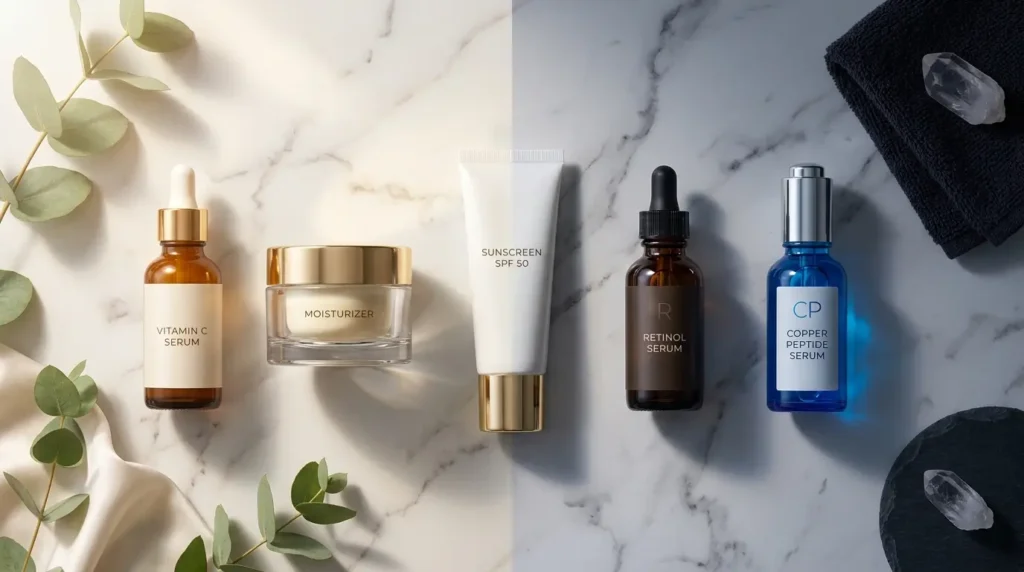
Vitamin C and Retinol are the most significant battles. Do not use together. Retinol is more effective at neutral pH, while Vitamin C requires an acidic pH.
Vitamin C during the day to protect, retinol at night to repair is the best combination. When used together, you may get a chemical burn or at least you will cancel both ingredients out.
In addition, watch out for Copper Peptides. Vitamin C may get oxidized as soon as it comes into contact with copper, and both will be rendered useless. Copper Peptides are for night use.
Don’t Ignore the Neck and Décolletage
Our faces get the same attention and we stop at the jaw line. Fewer oil glands and thinner skin on neck and chest than the face. It’s here that ‘crepey’ skin and sunspots appear first.
I always use whatever I’ve got on my hands on the back of my hands. Your hands spend as much time in the sun as your face and do get older as quick as your face.
Professional Treatments and B2B Insights
If you go to the medical spa or dermatologist, they may recommend Vitamin C Iontophoresis. This is no ordinary facial. They apply a small electric current to the skin to help the Vitamin C molecules penetrate more deeply into the skin than you could with a topical Vitamin C dropper.
Many times, professional-grade serums have a higher bioavailability than a drug store one would get. When searching for “near me” services, inquire whether the service provider employs stabilized L-ascorbic acid or fresh batches of the powder each time. The freshest mixed C is the strongest form that is currently possible.
Dealing with Pollution and Environment
Vitamin C is even more crucial for you if you reside in any big city such as New York or London. Car exhaust and city dust emits particulate matter that causes a particular type of oxidative stress, causing “smog aging.”
Here, seek out a serum that contains Vitamin E and Ferulic acid. This triad has been shown to enhance the sun protection ability of a skin by eight times. It forms a barrier that blocks pollution particles from entering the pores and causing inflammation.
Common Pitfalls to Avoid
- Application to damp skin: When applied to damp skin, it is irritating as mentioned.
- Too much at a time: Purchase the smallest size bottle. The shelf life of vitamin C is short.
- Don’t forget the lid: Oxygen is the enemy. Shut that bottle as soon as you are finished.
- No sun cream: Vitamin C makes skin slightly more acidic, although it does contribute to sun protection it is not a substitute for sun cream.
Why Price Matters (To a Point)
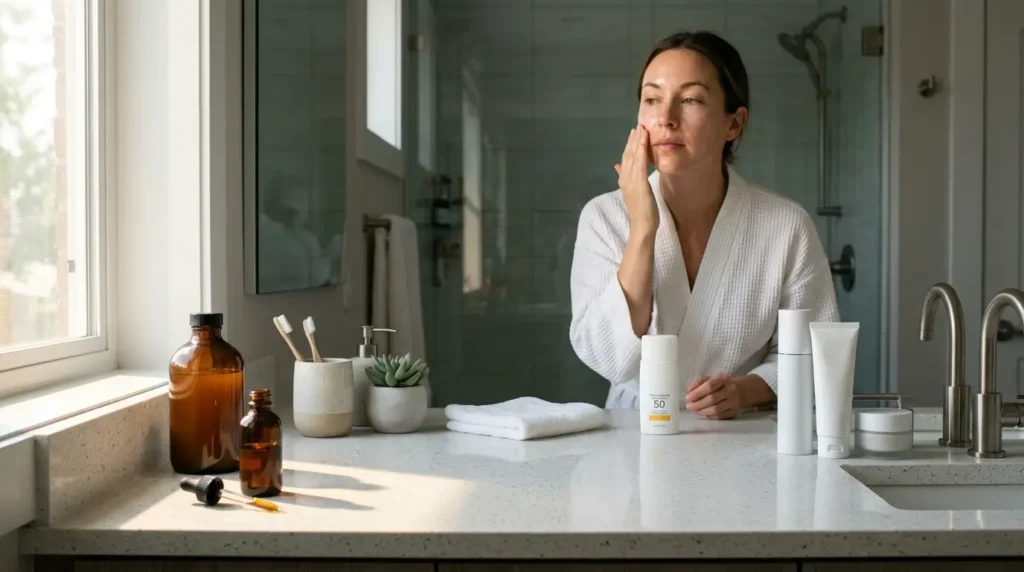
No need to pay $200 but often the $10 variety doesn’t contain all stabilizers such as Ferulic acid. It is an expensive chemistry to make Vitamin C that will not spoil within the week and is stable in acidic conditions. The charges are typically for the stabilization patent and the patent for the air barrier.
Frequently Asked Questions
Why Does My Vitamin C Serum Smell Like Copper?
This is typically the response to the skin’s oxygen or Ferulic acid. However, it should not be interpreted as evidence of product quality, as it is normal and should not lead to the conclusion that the product is bad unless it turns to dark orange.
Can I Use Vitamin C with Niacinamide?
Yes. The older research indicated that they neutralized one another, however, the newer formulations are more stable. For highly sensitive skin, you may get some flushing but for most people, it’s safe to stack them.
Does Vitamin C Cause Sun Sensitivity?
Technically, no: Vitamin C does not cause your skin to be more susceptible to sunburn than AHAs or Retinol. In fact, it helps to prevent it. However, it is essential to wear sunscreen at all times as it is an active acid.
Is It Okay to Use Vitamin C Twice a Day?
It’s an option but it’s a poor investment. Vitamin C is absorbed and remains in the skin for up to 72 hours. Once a day, in the morning is sufficient to maintain your “antioxidant reservoir.”
How Can I Tell If My Serum Has Expired?
Check the color. Clear or light yellow is OK. Still good to use bright yellow but use up quickly. If it’s orange or brown it has been oxidized and should be discarded. It will also be very sour and rancid.
Does Vitamin C Work for Acne Scars?
It is great for Post-Inflammatory Hyperpigmentation (red or brown marks after acne). This won’t have much effect on “pitted” or “structural” acne scars, which typically need laser therapy or microneedling.
Why Does My Skin Itch After Applying Vitamin C?
L-ascorbic acid has a very acidic range (pH 2.5 to 3.5). This acidity is essential to its function, though it may give a tingly or itching sensation, if it becomes a burning sensation, then rinse it off and use a derivative such as Sodium Ascorbyl Phosphate instead.
Next Steps for Your Routine
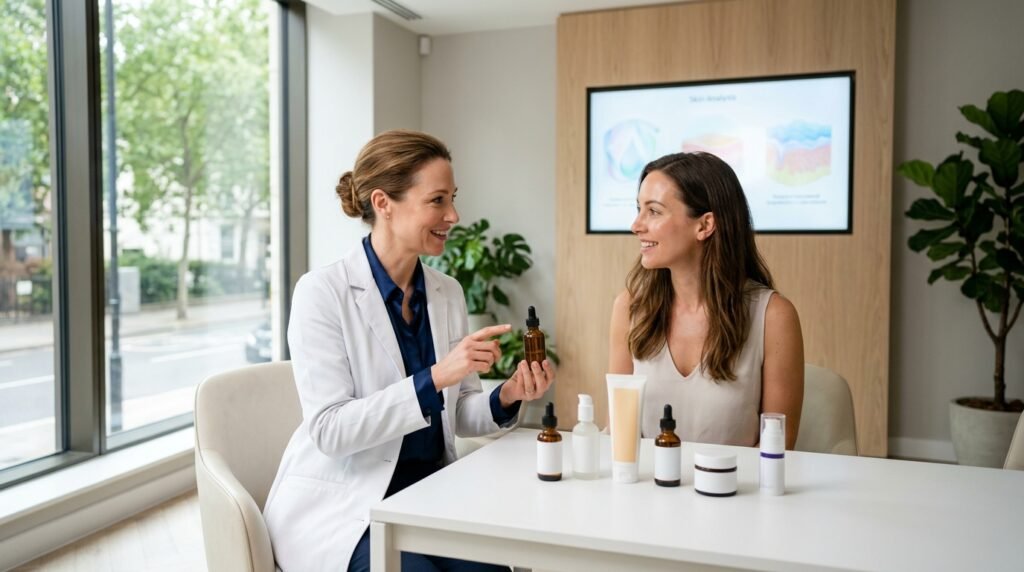
For those who desire to get started now, choose a serum containing 10% L-ascorbic acid and a dark glass container. Test it every other morning to see what it does to your skin. If you have not been sensitive, proceed to the point of using it every day.
Also Read: Best Ingredients To Look For In Anti Aging Products 2026
Monitor the colour of the liquid. If it turns dark, begin to apply it to your body (arms and legs) before it fully oxidizes and is unusable. If you use this product on your face three times a month, then you will begin to see the real difference in skin firmness and luminosity after three months.