The 5 Skin Types You Need to Know
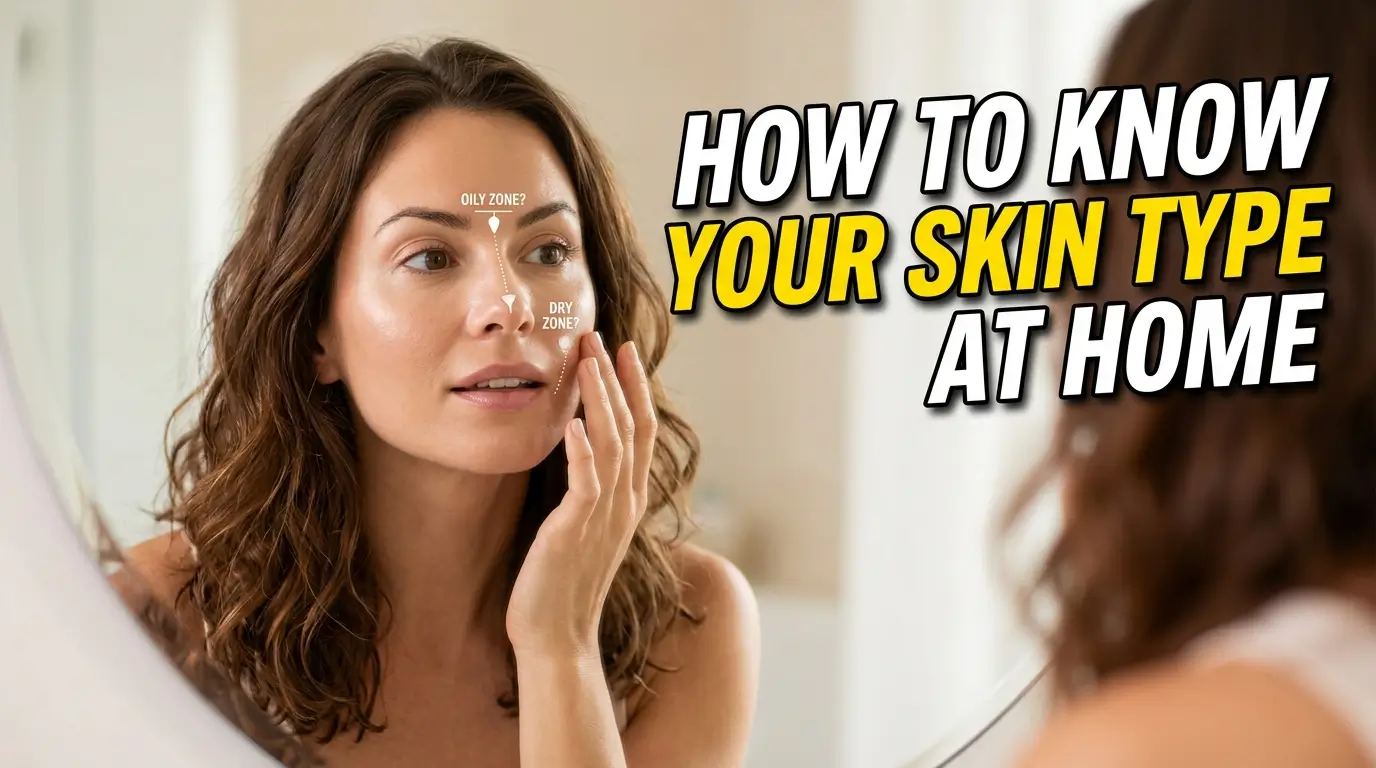
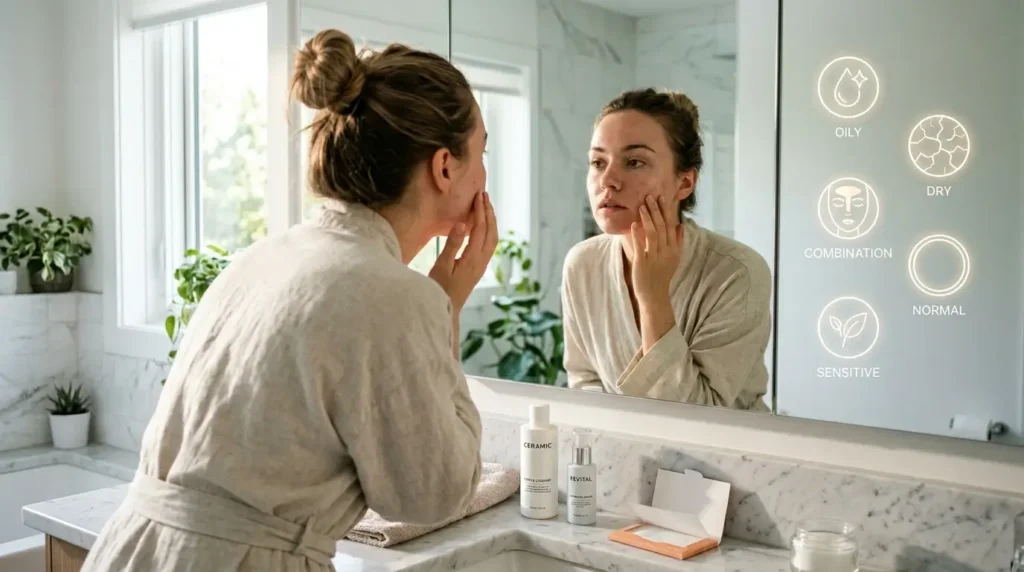
Skin is classified into five profiles by dermatologists. Oily is an overproduction of sebum. Dry lacks oil. Combination – an oily T-zone and dry cheeks. Normal keeps the moisture in a healthy balance. Sensitive to ingredients.
| Type | Feel | Look |
|---|---|---|
| Oily | Greasy | Shiny |
| Dry | Tight | Flaky |
| Combination | Pores are open and T-zone is shiny | Cheeks are tight |
| Normal | Comfortable | Smooth |
| Sensitive | Stinging | Red |
The Bare Face Method
Wash your face, wait 30 minutes, and see how your face looks after this. Tightness is also a sign of dry skin. If there is a glow in the forehead and nose, then it is a combination skin. If you can see the glow everywhere on your face, you have oily skin.
Also Read: What Does A Moisturizer Actually Do For Your Skin 2026
What Is the Bare Face Method?
This technique is designed to eliminate all skincare products from the skin! It restores your Stratum Corneum to its normal state. You notice the amount of sebum seeping out of the glands when you don’t interfere with it.
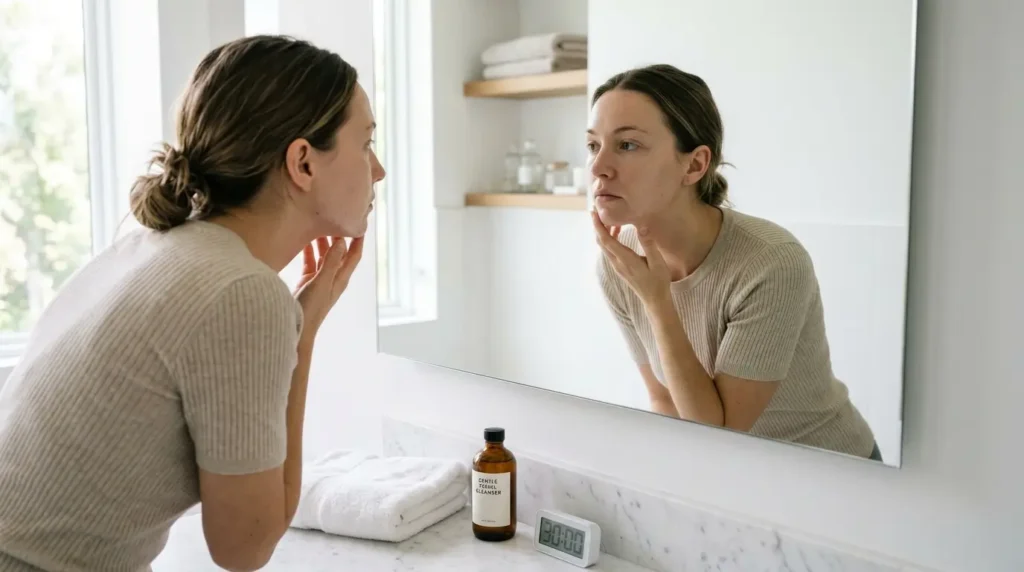
Step by Step Execution
- Use a simple gel cleanser to wash your face.
- Use a soft towel to dry skin.
- Shave your face. Avoid the use of toner, serum or moisturizer.
- Wait thirty minutes.
- Look for any raised spots on forehead, nose, chin and cheeks in good light.
The Blotting Paper Method
Use blotting paper to press on various parts of your face. Place the sheets up to the light. When the oil is transparent, you know your skin is transparent, you have normal sebum distribution, and you know your skin type.
Blotting Paper Method Steps
- Wait 1 hour after cleansing your face.
- Apply 1 blotting paper on forehead.
- Press another sheet on your nose and your chin.
- Press 3rd sheet on your cheek.
- Look at the oil marks on each piece of paper.
| Oil Absorption | Result |
|---|---|
| No oil | Dry |
| Combination Oil on T-zone | Oily complexion |
| Oil everywhere | Oily |
Dry Skin Versus Dehydrated Skin
Dry skin is devoid of oil and it is rough. There’s a lack of water in the skin, yet oil production. You can get greasy, dry skin that clogs up and causes acne.
These two conditions are mixed up. This mess can bust routines. Dry skin is a skin condition. There are very few functioning oil glands. Your skin produces little sebum year round. Dehydrated skin is a temporary condition. You are not hydrated! You may even be drinking lots of water, but environmental factors are taking water out of your epidermis.
Also Read: How To Layer Skincare Products In The Right Order 2026
When the skin around your eyes is dry, it will appear wrinkled when you smile. Skin has a poor appearance. Sucks moisturizer up in no time. The skin is dry and products lie on its surface. Epidermis is rough as sandpaper.
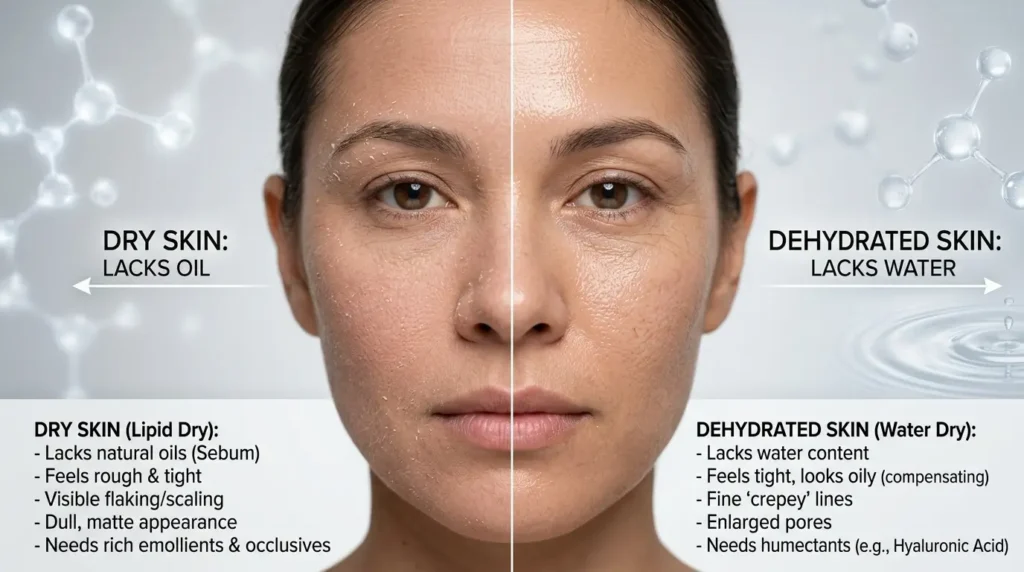
| Attribute | Dry Skin | Dehydrated Skin |
|---|---|---|
| Lacks | Oil | Water |
| Pores | Small | Varied |
| Breakouts | Rare | Common |
Climate and Humidity Factors
Your home can influence the results of home tests. I live in a moist environment. My skin has an oily appearance throughout the summer. During the month of January, the heating system removes moisture from the air. My skin is flaky and tight looking.
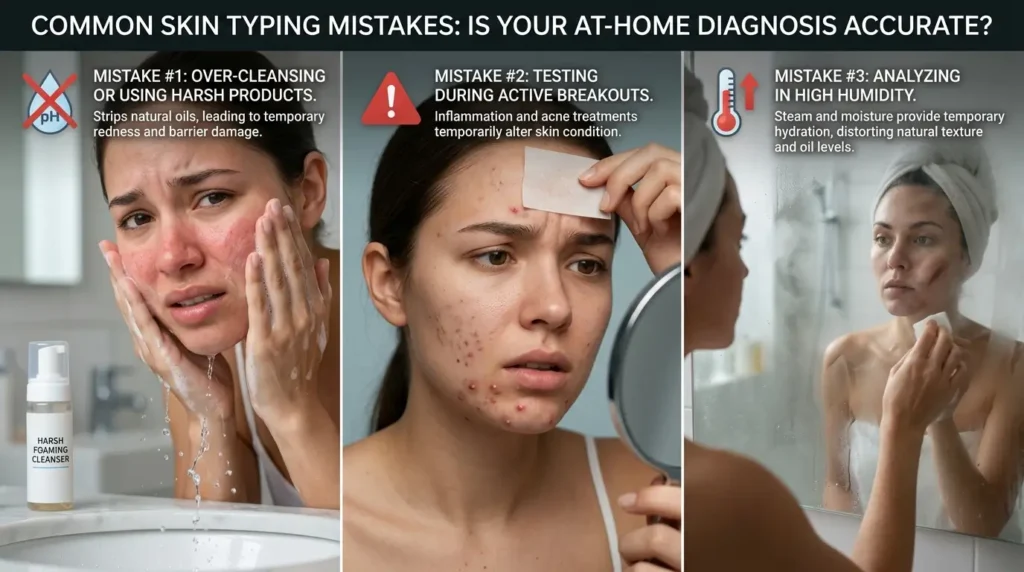
Test your skin at a mild season. Do not test when extremes of weather occur. When it’s humid, sweating occurs, which looks like oil. The false tightness is due to dry air. Your test results are affected by the humidity. A moist bathroom tricks the way you’re trying to go with your bare face. Steam dilates pores and forms a layer of moisture. It may seem like you have oily skin. Enter a room with the air conditioning on. The moisture evaporates. Your skin tightnesses. Test on a room with normal humidity. Keep for 30 minutes in moderately warm conditions.
Common Mistakes in Skin Typing
Individuals destroy their success before they ever begin.
Why Does My Skin Feel Tight After Washing?
You have used a strong cleanser. Bar soaps remove the oil from your skin. Your glands panic. To protect skin exposed to the outside, they secrete excess sebum. You believe that you are experiencing oily skin. Your barrier is damaged. Do not use a foaming soap for any of these tests.
Testing During a Breakout
When your skin is inflamed, it becomes different. A pimple is a swelling and formation of oil in a localized place. Do not take an accurate baseline until the breakout is over.
What to Do After You Know Your Type
Match your type to certain ingredients. Salicylic acid is essential for oily skin. Ceramides are necessary for dry skin. Lightweight gels are the best choice for combination skin. Minimal formulas are the choice for sensitive skin.
A skin type diagnosis is not a diagnosis on its own, it needs a routine adjustment. Gel cleansers are a great option for those with oily skin. Find salicylic acid to penetrate through the pores. Don’t use thick petroleum jelly. For dry skin, use cleansers that are cream-based. The lipid barrier is repaired by ceramides. Hyaluronic acid attracts water to the epidermis layer. Balance is the key to combating combination skin. Gently use a gel wash. Apply a matte lotion on your forehead. Apply thicker cream to the face. Most additives are not tolerated by sensitive skin. Fragrance causes erythema. Alcohol causes stinging. Use single ingredient formulas.
When to See a Professional Dermatologist
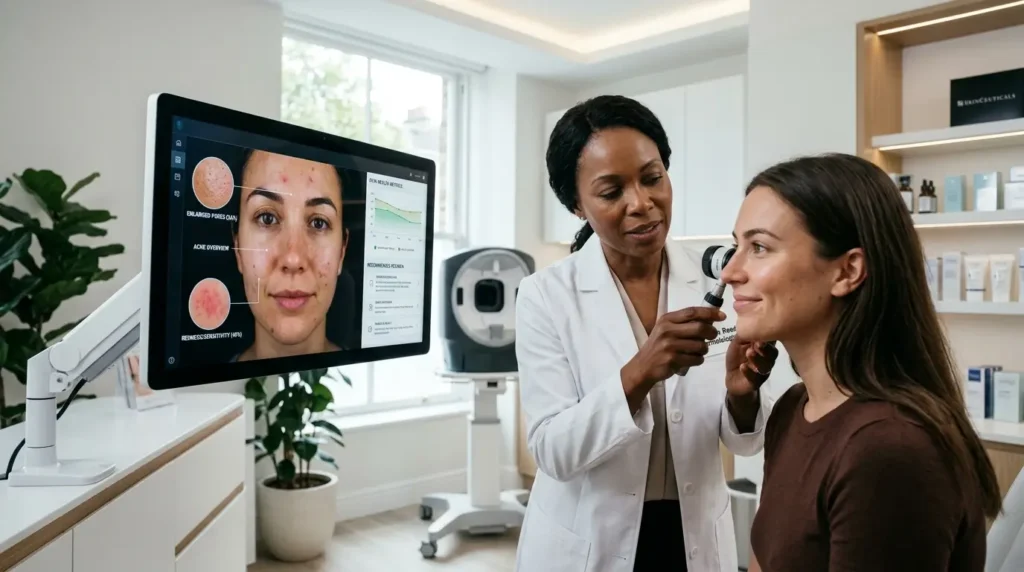
Home tests fail to diagnose medical conditions. If acne is severe, or if it is red or painful, see a board certified dermatologist. In a bathroom you have no answers, clinical tools have them.
The house remedies are not foolproof. They recognize cosmetic sketches. They are not accurate in their diagnosis of eczema, rosacea, or fungal acne. Don’t blot with paper if you experience skin burn after applying water. Find a dermatologist in the area. A Wood’s lamp or a Visia analysis system are used in a medical clinic. These machines analyze your pores and bacteria. In most markets around the world, a clinical skin analysis can range in price from $100 to $300.
Digital skin analysis services are provided by medical spas and beauty counters. These gadgets are used to capture close-ups of your pores. They give you a rating. The score is a sales tool in the sale of a product line. This score is used to determine the esthetician’s facial. Useful when you need to keep cosmetic dyeing looking good. Medical conditions are diagnosed by a board certified dermatologist. Prescription steroids are needed for eczema. Prescription antibiotics are needed for rosacea. It is necessary to treat fungal acne with an antifungal drug. These medical problems are not tested for at home or in the spa.
Also Read: Difference Between Toner And Essence For Beginners
FAQs
Is It Ok to Test My Skin Type Immediately After Washing?
No, 30 minutes is the waiting period. Leaves on you create water on your epidermis. Water helps plump up dry skin and clean up oily skin. If you allow this to happen, your own sebum production will return.
Does the Skin Type Vary as a Function of Age?
Yes. As time goes on the activity of your sebaceous glands decreases. Teenagers produce a lot of sebum. When adults reach their 50s, they will generate less oil. As you get older, your oily skin can turn to normal or dry.
How Often Should I Retest My Skin Type?
Retest your skin four times a year. Changes in humidity and temperatures throughout the season affect your moisture levels. A summer test does not produce results as well as a winter test.
Can Drinking More Water Fix Dry Skin?
No. Water is what is required to hydrate the body’s internal organs. The water bounces off your skin. Lipids are not present in dry skin. Oils or creams on the surface are required to seal in water.
Why Is My Forehead Oily but My Cheeks Are Dry?
You have a combination skin type. There are more sebaceous glands in your T-zone. Your cheeks have less glands. This will give you a combination of oily and dry patches on your face.
What Happens if I Use the Wrong Skincare Products?
Your skin barrier is compromised. Oily products will clog pores and promote bacteria growth on oily skin. Micro-tears in the epidermis occur with dry products on dry skin.
Are Online Skin Type Quizzes Accurate?
Most online quizzes have subjective questions. They are unable to observe physically. The bare face method has physical evidence of oil production. Rely on a web form trust.
It only takes 30 minutes and a clean face to determine your skin type. You save money. You no longer purchase mismatching anti-wrinkle creams. You create a habit which is effective for your particular glands. Do the bare face method tonight. Look in the mirror. Adjust your shelf.