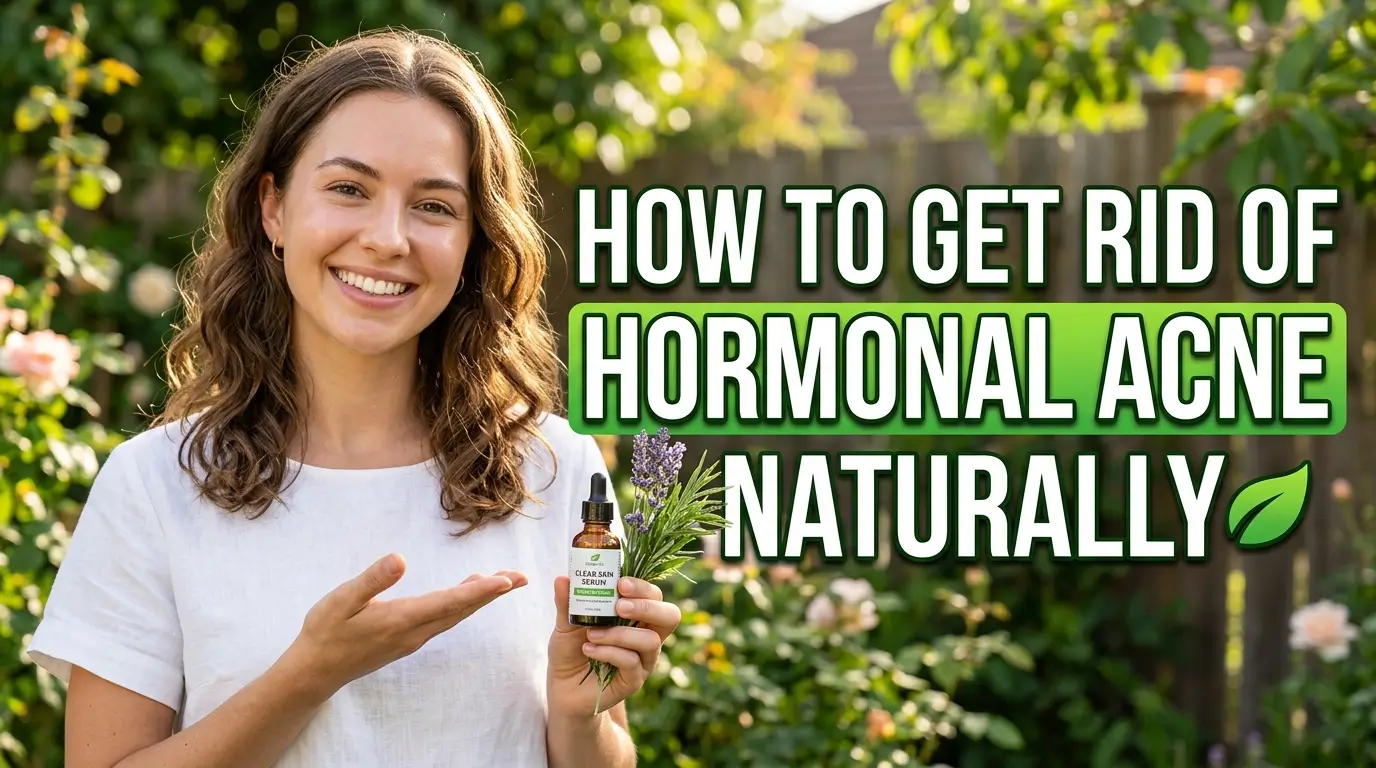
I awoke one day at the age of 31 and found pillow lines on my face. They stayed there until noon. My eye lines are fine after my morning coffee.
At the age of 30, your skin follows new rules. Genetic and splashing cold water is no longer sufficient. There needs to be a strategy to repair damage and avoid wrinkling. That’s why finding the best anti aging skincare routine for your 30s becomes so important.
I put a lot of products to the test and have burned out my skin barrier, and I spent a number of years talking to board-certified dermatologists. The beauty industry is trying to get you to purchase 12 different bottles. You don’t have to take them.
A specific, evidence-based strategy is required. This guide explains the precise protocol that is effective and outlines the best anti aging skincare routine for your 30s.
The Biology of Your Skin at 30
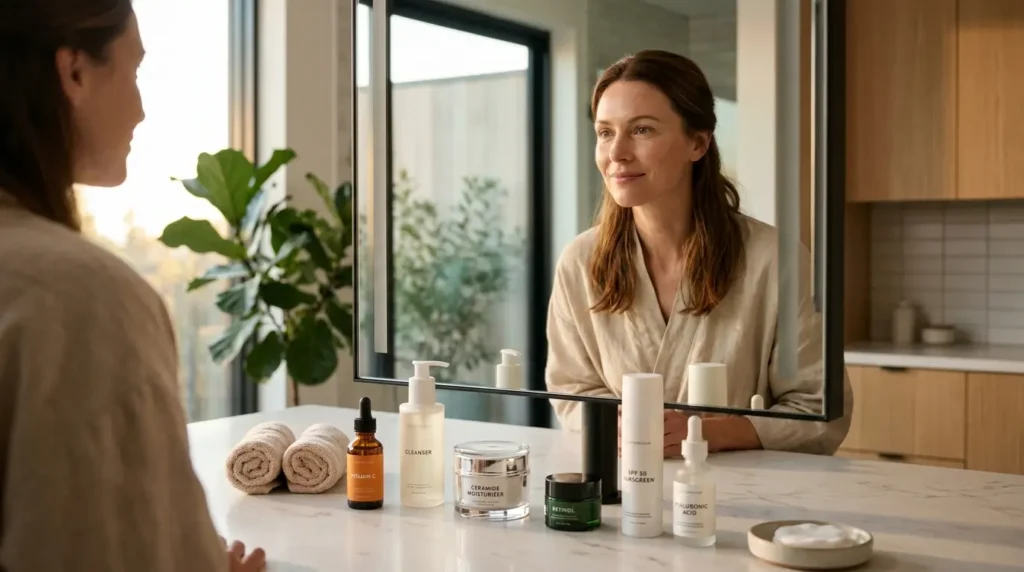
After age 25, production of collagen declines by 1% a year. You have a lower cell turnover. Elastin is less produced by the fibroblasts. You have a higher rate of water loss through your skin.
Also Read: Skincare Mistakes Beginners Make Every Day 2026
These biological changes lead to dullness, sagging and photoaging. That sparkle you had at 24 was because your cells were turning over quickly. By the time people reach their 30s, dead skin cells will stay on the stratum corneum for longer.
In your 20s, your skin begins to develop dark spots due to the UV rays. Remaining lipid barrier is damaged by oxidative stress of pollution. The focus is no longer on preventing acne but on preserving the structures.
Morning Anti Aging Skincare Routine
A good morning anti-aging regimen during your 30s needs to have three key elements: Vitamin C, moisturizer and SPF. Your morning objective is to protect the environment.
The sun, screen light and pollution assault your face every day. Protect it.
Step 1: Gentle Cleansing
Avoid using rough foaming gels. If you use strong cleansers, they will remove the oils from your skin and weaken your lipid barrier. Use a gentle, moisturizing cream cleanser. If you have dry skin, you should avoid washing your face in the morning and only wash with water, some dermatologists say.
Step 2: L-Ascorbic Acid Serum
The powerful, active form of Vitamin C is L-Ascorbic Acid. It scavenges free radicals and promotes the production of collagen. Use four drops on dry skin.
The pH is important. Vitamin C serums need to have a low pH level to be effective at penetrating skin. The lower end of the price spectrum ($75–$150) is usually more stable than the cheaper options.
Step 3: Moisturizer and SPF 30+
Sunscreen is the primary product of anti-aging. Ultraviolet A (UVA) rays can pass through windows and break down collagen. Apply a ceramide moisturizer on top of serum and then apply broad-spectrum SPF.
Chemical sunscreens take in the UV rays. They are blocked by physical sunscreens. Choose the one that you’ll wear on your face every day.

Night Anti Aging Skincare Routine
At night, your activities are centered on repairing cells. Double cleansing, application of a retinoid and application of a heavy barrier cream are essential.
Your skin works hardest at night. You add active ingredients when you sleep and it starts your cells renewing.
Step 1: The Double Cleanse
H2O will not wash away water-resistant SPF and makeup. Wash with an oil-based cleansing balm first. Apply to dry skin for melting away the day’s products. Rinse and then use your soothing morning cleanser.
Step 2: Retinoids or Peptides
Retinol is the benchmark for collagen production. Binds to receptors in the skin, and accelerates cell regeneration.
Apply sparingly onto dry skin. If you’re a novice, consider skin cycling. Apply retinol to day 1, exfoliant to day 2 and barrier repair on days 3 & 4.
Step 3: Lipid Barrier Repair Cream
Retinol causes dryness. To avoid transepidermal water loss you need to trap moisture against your skin. Apply a rich cream with ceramides, squalane and hyaluronic acid on the face and neck.
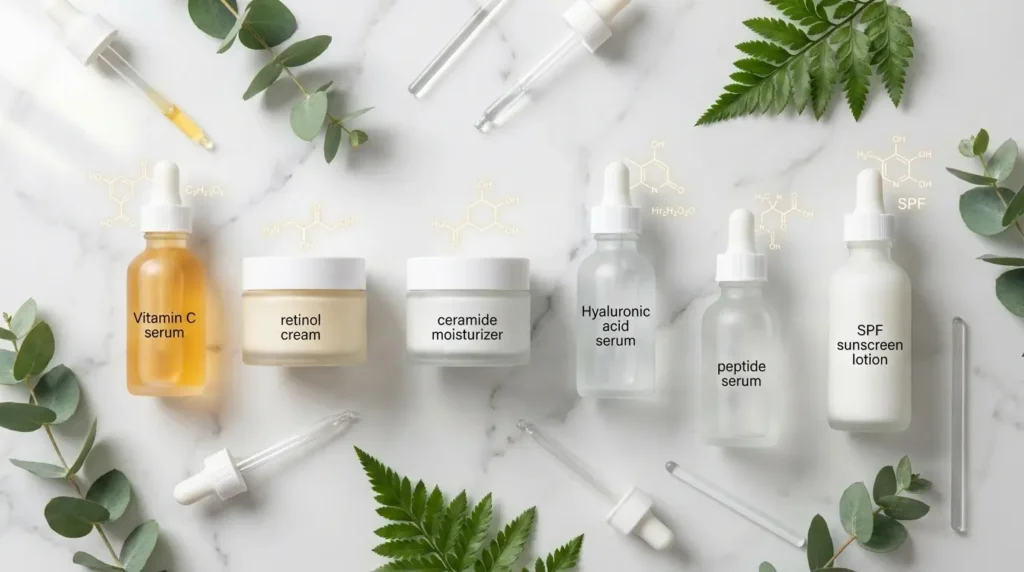
The Anti Aging Ingredient Framework
Do not purchase just any products. Use these ingredients and develop your routine around them.
| Active Ingredient | Time to Use | Core Benefit |
|---|---|---|
| L-Ascorbic Acid | Morning | Blocks oxidative stress |
| Retinol | Night | Boosts cellular turnover |
| Ceramides | Night | Repairs lipid barrier |
| Hyaluronic Acid | Anytime | Plumps surface wrinkles |
| Broad Spectrum SPF | Morning | Stops photoaging |
Common Skincare Mistakes to Avoid
Dermatologist Warning: Never use retinoids on wet skin. Water is a means of transport. Pulls retinol into the pores and produces intense chemical burns and flaking.
I did that at 32. My face was peeled for a week.
Here are some other common mistakes to steer clear of:
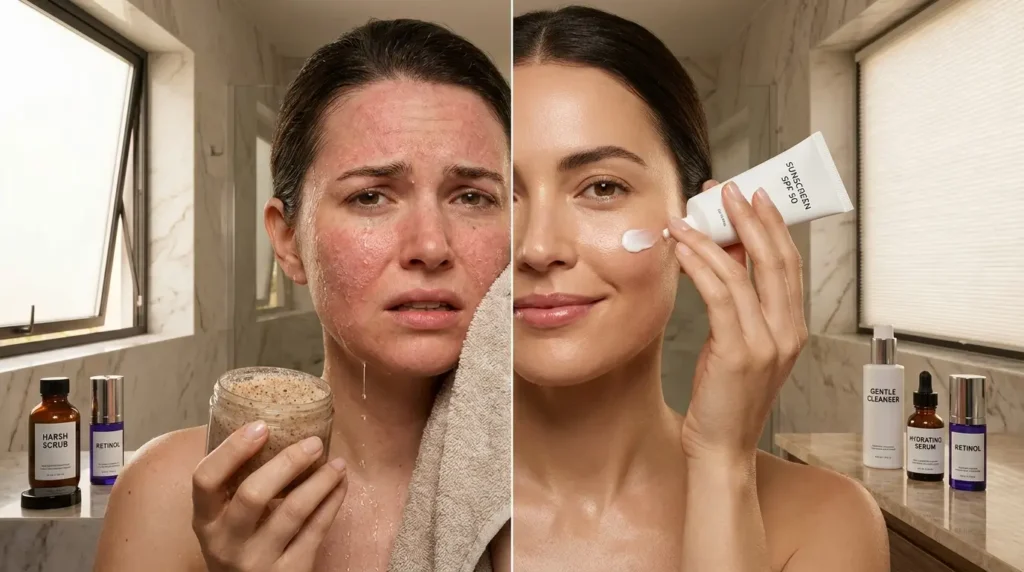
- Neglect of neck and chest. Your face goes only as far as your nipples. Spread all serums and SPF on to the décolletage.
- Over-exfoliating. When a combination of physical scrubs and chemical peels are used simultaneously, they will destroy the stratum corneum.
- Inconsistent routines. The amount of time taken for retinol to produce structural changes in the dermis is 3 months of daily use.
Pregnancy Safe Anti Aging Alternatives
Pregnancy and nursing merge with the 30s crowd. During this period, it is not possible to use retinol or high doses of salicylic acid.
Use Bakuchiol in place of retinol. Bakuchiol is derived from the babchi plant. Clinical trials have demonstrated its ability to stimulate cell turnover in a manner similar to retinol, without the harmful side-effects or risks to foetuses.
Peptide serums can also be utilized. Peptides are short chains of amino acids. They communicate with your body to create more collagen and are safe for pregnant women.
Also Read: Why Do I Keep Breaking Out On My Chin And Jawline 2026
Adapting for Global Climates
A common method that works in damp Southeast Asia does not in the dry climate of the western part of the United States. You need to adjust to your surroundings.
Hyaluronic acid works in a reverse manner in a dry climate. It sucks up moisture from the deep layers of your skin, and dries it off into the dry air. It must be covered with a heavy occlusive ointment.
Heavy creams have a tendency to clog up pores and lead to acne, especially in a humid tropical climate. Use light gel moisturizers instead of heavy creams for nighttime use.
At Home Care vs Professional Treatments
Creams and serums are limited in their effectiveness. They affect the top layer of skin and the upper layer of dermis. They can’t fix volume loss that is too severe.
Many people combine the professional medspa treatments in their 30s. Clinics and licensed estheticians suggest a blended approach.
- Neuromodulators: Botox and Dysport paralyze muscles. They prevent wrinkles from becoming “static” wrinkles.
- Chemical Peels: Medium-depth peels burn the top layer of skin to remove sun damage.
- Microneedling: Tiny holes are created in the skin with needles. These holes are repaired by the body by generating new collagen.

Budgeting for Skincare
The amount of the face massage is $50 or $500 per month. You have to be familiar with the way to spend your cash.
There is a debate between medical grade and drugstore skin care products. Cleaners from Drugstore are OK. Pay $15 for a basic face wash.
Use money on active serums. Low price Vitamin C can oxidize, and become orange in the bottle. It does harm to your skin when it turns orange. Purchase a stabilized L-Ascorbic Acid serum for $80 to $150.
Prescription Tretinoin is more effective and less expensive than expensive luxury retail creams. Seek advice from a dermatologist to get a prescription.
FAQs
Is 30 Too Late to Start Anti Aging Skincare?
Nope, beginning at 30 is a good age. Though your skin is still very regenerative. Early sun damage can be turned around and protection against future volume loss can be established.
What Percentage of Retinol Should a 30-Year-Old Use?
Use over the counter retinol (0.25% or 0.3%). Develop tolerance in a few months. If that does not cause peeling, you can proceed with the 0.5% or a doctor-prescribed 0.025% Tretinoin.
Can I Use Vitamin C and Retinol on the Same Day?
Yes, but separate by time. Apply Vitamin C to face in the morning to minimize damage from the environment. Apply Retinol to your face at night to promote healing. They will irritate if used at the same time.
How Much Collagen Do You Lose in Your 30s?
Studies show that as people age, beyond the age of around 25 years, they lose approximately 1% of their natural collagen production per year. At age 35, you’ve lost one full 10% of your structural support.
What Is the Best Minimal Routine for Sensitive Skin?
Use a milk cleanser to wash. Apply a peptide serum instead of retinol. Apply ceramide cream without any fragrance. Take a mineral SPF in the morning. Try to hold the steps to a minimum to prevent inflammation.
How Do I Know If My Skin Barrier Is Damaged?
Basic moisturizer will sting your face when applied. Redness, flaking and small bumps will be visible. If this occurs, discontinue all active ingredients and apply a gentle cleanser, along with heavy healing cream, for two weeks.
What Is the Difference Between Medical Grade and Drugstore Skincare?
Medical grade products contain more active ingredients and effective delivery systems. Perform more rigorous clinical testing. Over-the-counter medications are aimed at the general public and tend to have less strength to prevent skin irritation consumer lawsuits.

Conclusion and Next Steps
The key to creating the optimal anti aging skin care regimen for your 30s is discipline. It’s not necessary to have an overflowing bathroom cabinet with glass dropper bottles.
Also Read: Salicylic Acid Or Benzoyl Peroxide: Better For Acne 2026
Have a product audit today. Replace the abrasive scrubs. Purchase a mild cleanser, a stabilized antioxidant serum, a trusted retinoid and a sunscreen that you love.
Wash your face. Apply your actives. Wear your SPF. Repeat every day. You will see the results when your 40s.